Here you will find valuable resources related to CREW’s Strolling Science Seminars and citizen science. These resources are designed to help you learn more about the Strolling Science Seminar topics and to engage in a citizen science project of your own choosing. It is our hope that every person who attends one of our seminars will voluntarily engage in a citizen science project of their own choosing.
What is Citizen Science?
Citizen Science is a term used when regular, everyday citizens (often those without formal scientific training) do science. It involves regular folks conducting monitoring and data collection on natural phenomena, such as doing bird counts or butterfly counts. At CREW, we believe when everyday citizens get engaged in citizen science they become more knowledgeable about the resources and natural world and can then help support efforts to protect and preserve species, habitat, and water resources.
How Can You Get Involved?
To get involved and become a citizen scientist, you can attend one of our Strolling Science Seminars to help you get started, or simply enroll in one of the many citizen science projects listed below.
Local Citizen Science Projects (in the Greater Charlotte Harbor Watershed)
- Frog Monitoring – Southwest Florida Amphibian Monitoring Project
- Audubon Christmas Bird Counts – contact Corkscrew Sanctuary or Audubon of Southwest Florida for dates and info.
National and International Citizen Science Projects
If you want to conduct citizen science from your home, you can get involved with any one of these national projects that engage people all over the country. It’s as easy as signing up and following their directions.
- Goodfellow: Citizen Science 101: How Anyone Can Contribute to Scientific Research and Development
- Nature’s Notebook – record your observations for a national plant and animal life cycle observation project – sponsored by the USA National Phenology Network.
- Project FeederWatch– help Cornell Lab of Ornithology scientists collect bird data. Count birds at your home bird feeder.

- NestWatch – monitor bird nests of all kinds.
- World Water Monitoring Day – monitor your local stream, lake, or other wetland and submit your data.
- Project BudBurst – collect data on plants through the seasons to see what changes are occurring long-term.
- Firefly Watch – are fireflies disappearing? Help find out by monitoring them in your neighborhood.
- Monarch Larva Monitoring Project – collect long-term data on larval monarch populations and milkweed habitat to help “conserve monarchs and their threatened migratory phenomenon”.
- Bee Hunt – join “this scientific study to understand the impact of climate change and other factors on plant-pollinator interactions, their geographic distributions, and seasonal abundances.”
- FrogWatch USA – Monitor frog calls in your neighborhood wetlands and report them to FrogWatch USA. – Better yet, join a local SW Florida Amphibian Monitoring Network route and help collect local data right here in SW Florida.
- The Great World Wide Star Count – be a star-gazer after dark during the month of October each year and you can help astronomers monitor the constellations.
- Project Roadkill – choose a road to monitor twice a day and report roadkills.
- Mushroom Observer – take photos and describe mushrooms to add to a world database.
- The Great Sunflower Project– plant your own sunflowers (or Bee
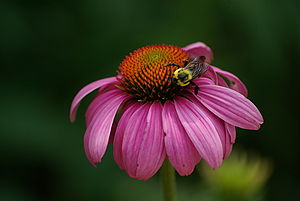
Image via Wikipedia balm, Cosmos, Rosemary, Tickseed, Goldenrod and Purple coneflower) then monitor the bees that use them to help find out what bees are doing and how we can save them.


Citizen Science Projects using Mobile Technology
Yep, there’s an app for that, too! In this age of mobile technology, there are many mobile apps that have been developed to help build databases of scientific information based on sightings of plants, animals, and animal signs wherever you are. You might try one of the following to get started :
Wild Lab – Use WildLab to report your wildlife sightings.
Project Noah – Document nature with your mobile phone.
Leafsnap – Use your iPhone to help build a database of photos to ID plants.
Find a Project
None of the above fit your needs? Use Cornell’s Citizen Science Central website and toolkit to find a project that suits your interests.

Related articles
- Strolling Science Seminars New Schedule – and a grant from CHNEP (crewtrust.org)
- Citizen Science as Participatory Science (povesham.wordpress.com)
2 Replies to “Citizen Science”
Comments are closed.