Hidden in the Forests of CREW: Florida Spotted Skunk

Eastern spotted skunk, Florida. FWC photo

Within the CREW lands live a diverse population of wildlife. Some are easy to spot, like the white peacock butterfly or white ibis, some are easy to hear like the red-shouldered hawk, whereas some are much more elusive and you might spend years before even catching a trace. In this series we’ll explore some of the lesser known and ever elusive species that call the CREW lands their home. To start, we’ll focus on the fascinating life of the eastern spotted skunk (Spilogale putorius ambarralis) and all its various distinctions!

In Florida, the eastern spotted skunk is considered a Species of Greatest Conservation Need (SGCN). This is an important distinction that’s given to particular species in an effort to conserve the states wildlife for future generations. Florida Fish and Wildlife Conservation Commission (FWC) wants to involve you in their new project aimed at learning more about Florida’s skunk populations. To report a skunk sighting, visit myFWC.com/skunksurvey and make a difference in this effort!

Now, a little more background on these elusive forest dwellers. Eastern spotted skunks are generally smaller than their striped cousins also found within this region, with an average body size (excluding their tail) of 11-12.5 inches and a total length of about 21-24 inches. Spotted skunks are also striped, with one large spot between the eyes and four stripes down its back, but stripes are wavy and broken and appear like spots. While research is ongoing, their habitat is thought to occur within the understory protection of dense scrub habitat, like many areas protected within the CREW lands. The scrub cover, like that found within the saw palmetto understory, is thought to protect them from predators like great horned owls or bobcats, among other threats.

Beyond the defense of their preferred habitat, skunks are well known for their last-ditch efforts of protection. However, if they come across a perceived threat, they first try to run away and can even climb a tree. When unable to retreat they often try to make themselves appear bigger, sometimes performing handstands. As a last resort, they rely on the pungent odor of their spray, accurate up to 15 feet, serving as a distraction so they can escape.

When you’re out walking the CREW trails, keep an eye to the ground for areas that are hospitable for burrowing, like saw palmetto. Skunks will sometimes make their own burrows, but they will also den in vacant mammal or gopher tortoise burrows, brush piles, wood piles, areas with high grass or other similar places of shelter. Current research shows that skunks are mostly nocturnal, foraging around their dens at night, but emerging research indicates that eastern spotted skunks in Florida are active during the day.

All skunks are solitary by nature with adult eastern spotted skunks usually only congregating to mate in early summer and another time in the fall. Generally, they give birth to five or six young, called kits. Newborn skunks are blind but are easily recognizable to all by their fine hair displaying the black and white pattern of adulthood. Young kits will stay with their mother for several months, leaving their den sites, between six and eight weeks of age with their mother’s protection to forage.

Eastern spotted skunks are omnivores whose diet depends on the season, adapting to what is available at different times of the year. Scat analysis has found that larger insects including beetles and grasshoppers are important in their diet, along with small mammals and crustaceans, depending on the season.

We urge all that frequent the CREW trails to keep an eye, and nose, out for these fascinating forest dwellers and report all sightings to the FWC for their future protection and for the preservation of the habitats on which they depend.

Skunk infographic. FWC

Adapting to the pandemic on the CREW trails

by Nan Mattingly

Everyone has a story about how the ongoing pandemic has rearranged his or her life. Some changes are major – working from home or losing a job. Difficulty finding childcare. Worry about loved ones becoming infected.

And some changes are less drastic. Instead of shopping for groceries in the usual places, more people are ordering food from shopping services or ordering online. Wearing a mask in public. Avoiding large gatherings.

Here at the CREW Land & Water Trust we’ve had to adapt, too. Because all of the trails are owned by the South Florida Water Management District (SFWMD), the CREW Trust must follow state regulations. When SFWMD closed all four of trail systems in April, we had to implement changes mandated by the state. We cancelled any remaining in-person events and once trails reopened, we posted signs reminding our visitors to wear masks and practice social distancing.    

Now that the winter season is beginning, we are again offering weekly guided tours and we’ve added a few new experiences (more about those below). The CREW Trust requires program participants to wear masks and make every effort to social distance wherever possible. Before we set foot on the trail, guests will sign two liability waivers – one for the CREW Land & Water Trust and one for the SFWMD. And we’ve added a nominal fee for each weekly tour, $5 per person for most of our guided tours and $10 per person for our “Bike the Loop” tour at CREW Bird Rookery Swamp. As usual, special tours with experts, such as a birding tour with renowned ornithologist Bernie Masters in January, start at $20. (Sorry – Bernie’s tour is sold out!) Members enjoy a reduced rate for most events.

Why have we put a price on our weekly tours? Last year they were free (though registration at our website has always been required). But during this pandemic we’ve felt the pinch just like everyone else. We have had to cancel our major yearly fundraising event, the CREW Concert & Silent Eco-auction, so we have had to look for other ways to raise money to support our educational and outreach programs.

Our new initiatives are intended to safely introduce more participants to our unique environments as well as to support our programs. On two Saturdays a month during this season we’re offering a chance to Bike the Loop at Bird Rookery Swamp. Bring your own bike and be prepared to get dirty! The 12-mile loop offers a moderately demanding experience as well as a chance to see lots of alligators. We’ve also added weekend guided tours at various trail systems.

To sign up for a guided tour or other events, please go to our website CREWtrust.org and explore the possibilities. This is a great chance to get outside and enjoy the glorious winter weather. Please remember that we follow CDC guidelines to keep all of us safe during this pandemic. When you sign up for a tour, you’ll find a recap of those important guidelines. Please be prepared to follow CREW Trust requirements when you’re on the trail with us.            

Create a New CREW Tradition This Year

By Nan Mattingly, CREW Trust volunteer

Every family has its own holiday traditions. Traditions are sometimes inherited and sometimes created. However you acquire them, your family traditions are always meaningful, and they often lead to treasured family experiences.

When I was young, my father encouraged me and my siblings to enjoy the outdoors. He taught us to ice skate, to play baseball and other sports, and to explore nature. My mother loved to create feasts on special days using favorite family recipes. (She almost incited an insurrection the year she put oysters in the turkey dressing.)

Somehow, we managed to unite these two family traditions, gorging ourselves on mother’s many dishes and then, instead of lounging around and digesting, following up the big meal with a family hike. When my parents retired and moved to Delaware, they bought a small house nestled in a mostly pine wood forest. You could smell and feel the salty air coming from the Atlantic Ocean mingling with the fresh pine scent.

Then our holiday hikes became even more special. The chilly winter temperatures, so close to the Atlantic, encouraged us to walk briskly. It was a time not only to walk off all that food but also to catch up on family news. I can remember spotting various birds, plants and trees, especially gorgeous holly trees that obligingly produced red berries for us at the end of the year and added to the festivity of the occasion. By the time my parents moved to Delaware, all their children were adults and scattered across several states. The holidays at the end of the year provided us with the chance to gather and enjoy mom’s cooking as well as renew our relationships with each other.

These hikes became a sacred family tradition. No excuses – we all participated, except my mother. I guess she was too worn out from days of planning, shopping and cooking.

Now two of my siblings and I live in this area. We have continued the family tradition of hiking on holidays. It reminds me of so many years that we gathered and enjoyed the outdoors together. It’s a tradition that I recommend – and the CREW trails offer your family the perfect chance to establish your own outdoor traditions on the holidays.

Hiking in southwest Florida, in the temperate winter months is a joy. You can create your own family holiday hiking tradition on the CREW trails. We have four unique trail systems, one located in Lee County (CREW Flint Pen Strand) and three in Collier County (CREW Marsh Trails and CREW Cypress Dome, both located on Corkscrew Road, and CREW Bird Rookery Swamp on Immokalee Road).

At CREW Marsh Trails, you can hike to an observation tower that overlooks a 5,000-acre sawgrass marsh, a breathtaking sight, and you can see all the way to Corkscrew Swamp Sanctuary across the vast marsh. At Cypress Dome, you can enjoy the unique habitat of a cypress dome, wading in cool shallow water to the center of the shadowy forest of tall cypress trees. Flint Pen Strand offers multiple trails through pine forests as well as seasonal lakes on the east side that attract a myriad of wading birds at this time of year. If you’re lucky, you’ll spot a bald eagle that resides close to the lakes flying overhead. It’s a magnificent sight.

Bird Rookery Swamp offers yet another kind of experience. There’s a boardwalk that winds through the cypress trees, leading to a wide elevated trail that once accommodated narrow gauge trains to haul the mighty cypress trees out to sawmills. Logging at Bird Rookery Swamp ended in the 1950s, so the cypress trees you see now are second-growth trees that rapidly grew to restore the forest. Hurricane Irma in 2017 uprooted many of the red maples but you’ll see that they have returned in force. At this time of year, the cypress trees are dropping their needles, but the maples are showing off their beautiful red leaves, just in time for the holidays.

All four of the CREW trail systems are open from dawn to dusk. Trails are clearly marked, and a trail map is available at information kiosks at the trailheads. Bring the family dog (not recommended at Bird Rookery Swamp) – on a leash – and be sure to clean up after him or her. There’s no entrance fee, but donations are much appreciated and are put to good use maintaining the trails and supporting educational programs.

COVID-19 has stressed us all this year. The fresh air and vivid greenery all around you on our trails can help your family to de-stress. Please heed recommended practices on the trails, especially socially distancing. But don’t worry – there’s plenty of room for us all to enjoy the outdoors safely.

A Brief History of Bird Rookery Swamp

by Nan Mattingly

Hike the Loop with CREW. Photo by Bill Zaino

As you set out to enjoy the riches of Bird Rookery Swamp (BRS for short) think of the people who have used this land before you.  Some highlights:

From approximately 500 BC to 1600 AD, the fierce Calusa tribe traversed this huge swamp from their home base on the southwest Florida coast (in the vicinity of what is now Ft. Myers Beach) to their hunting and fishing camps at Lake Trafford in Immokalee. Waterways (rivers, streams, even sheet flow) were so plentiful that the Calusa traveled in canoes hollowed out from giant bald cypress trees harvested in Bird Rookery Swamp. They made use of what they found at Bird Rookery Swamp for their daily living needs; they ate the hearts of sabal palms and used the fronds to weave floor mats and to roof their dwellings. They harvested the fruit of cocoplums and pond apple trees, they fished the waters, and they used plants for medicinal purposes.  

Dugout Canoe found at Lake Trafford. Photo by Andrew West

The bird plume trade drew feather hunters to Bird Rookery Swamp from the late 1800s to the early 1900s at which time state and federal laws were enacted to protect the birds. At the height of the trade, a pound of bird plumes was more valuable than a pound of gold, and the white ibis (known as the Chokoloskee Chicken) was considered a delicacy. Today Bird Rookery Swamp provides sanctuary for at least 45 kinds of birds, including some protected and threatened species.

Rosette Spoonbill

The timber trade brought the next economic exploitation of Bird Rookery Swamp. In 1934, cypress wood sold for $60 to $100 per 1,000 board feet. Over 40 miles of elevated trails (called trams) were constructed to run a narrow-gauge train to extract harvested trees, which were sent to a mill in central Florida. Those trees, generally around 130 feet tall and 25 feet in girth, were 500 to 600 years old. Cypress was a hard, durable wood resistant to water and bugs. Cypress trees harvested at Bird Rookery Swamp were used to build PT boats during World War II, to rebuild war-torn Europe and to provide wood for homes sold through the Sears catalog. The last surviving steam engine used on the Bird Rookery Swamp trams is on display at the Collier County Museum. A court order in 1957 ended logging at Bird Rookery Swamp.

Farmers and ranchers have used Bird Rookery Swamp lands since the late 1800s to grow orange trees and to plant field crops such as tomatoes, melons and potatoes. If you look carefully into the Bird Rookery Swamp forest, you’ll see a few derelict barbed wire fences, relics of the cattle ranching that ended in the mid-1970s.

Crepuscular Creatures

Tips to keep animals safe on your evening commute

Theme: Fall-back time change means nocturnal and crepuscular animals are more active around your evening drive.

Definition: Crepuscular: occurring or active during twilight. Crepuscular creatures abound in our area. Crepuscular creatures are most active at dawn and dusk. They tend to sleep at night and lay low during mid-day. This differs from those animals that are nocturnal or diurnal.

For people, the “fall-back” time change creates noteworthy inconveniences like realizing you’ve forgotten how to reset the clock on your dash or unpacking the groceries in the dark, but for wildlife the unintended consequences can be more severe. Namely, the increased number of cars on the road during the evening twilight hours can have a downright dangerous impact on crepuscular animals’ natural evening routines. In many states across the country, November sees more car accidents involving wildlife than any other month. According to transportation studies, motor vehicle accidents involving wildlife rank as the third leading cause for crashes behind speeding and inattentive driving. So, as many of us are now driving during the evening twilight, please take a moment to remember some important habits that will help out our local wildlife and us too. 

Remember These Tips

While some collisions may be unavoidable, motorists can reduce the likelihood of an accident by taking the following precautions:

  • Slow Down! Driving more slowly increases reaction time and reduces the chance of a collision.​
  • Stay alert while driving at dusk and dawn. This is when many of Florida’s wildlife are the most active and are likely to be crossing roadways.
  • Scan ahead and watch for movement along roadsides. When driving at night, watch for shining eyes in headlights. Always look and be prepared for more than one animal.
  • Obey traffic signs and watch for wildlife warning signs.

A side note for when you get home – dogs should be leashed/supervised. Morning and evening walks with our dogs are great fun and relaxing, but they can be very stressful for local wildlife if our dogs chase or roam too close to a den site. Our schedules shift as a result of Daylight saving time, so remember that the routine wildlife we’re used to will be changing, too. 

Further reading: 

According to the research article, Daylight saving time can decrease the frequency of wildlife-vehicle collisions, daylight saving time (DST) could reduce collisions with wildlife by changing the timing of commuter traffic relative to the behaviour of nocturnal animals. 

Fine Feathered Friends Found at CREW

By Nan Mattingly, CREW Trust volunteer

You don’t have to be an expert to enjoy the birds at all four CREW trail systems, and you don’t need fancy equipment. Just an inexpensive pair of binoculars and the will to get outside and use them.

We consulted with some birding experts to identify birds you’re likely to see throughout CREW. Their best tip for seeing most of the birds named below is to start early in the morning, just after sunrise.

CREW Marsh Trails

Blue jay: A medium size bird with a blue body, black bars on the wings and a crest on the top of the head. Present year-round in Florida. At CREW Marsh Trails, look for them in the large live oaks just north of the tower overlooking the marsh. You may hear them before you see them; they have a variety of loud calls and unique songs.

Red-shouldered hawk: Medium to large size raptor with rust-red bars on its breast and where the wing meets the body. Tends to use the same territory for years, even the same nests. Screeching, repetitive call. This hawk stalks prey from a perch, so look up when you hear that loud call. Found throughout CREW; at the Marsh Trails, you may see them in the pine flatwoods and oak hammocks.

CREW Cypress Dome Trails and Caracara Prairie Preserve

Swallow-tailed kite: All black and white with a sharply forked tail and a four-foot wingspan. Nests in the tops of pine trees in early spring in southwest Florida, migrating from South America. It’s a breathtaking sight to see a group of kites circling and swooping, dropping briefly to skim the surface of lakes to drink or bathe. Listen carefully for their sweet, shrill cries or soft whistles.

Turkey vulture: Red head, white-tipped beak, dark body feathers that resemble those of a turkey. Soars above tree tops alert for freshly killed prey, using both sight and smell to find food. They are a consummate scavenger, cleaning up the countryside one bite at a time. This bird has no song, but it hisses, grunts and growls when eating.

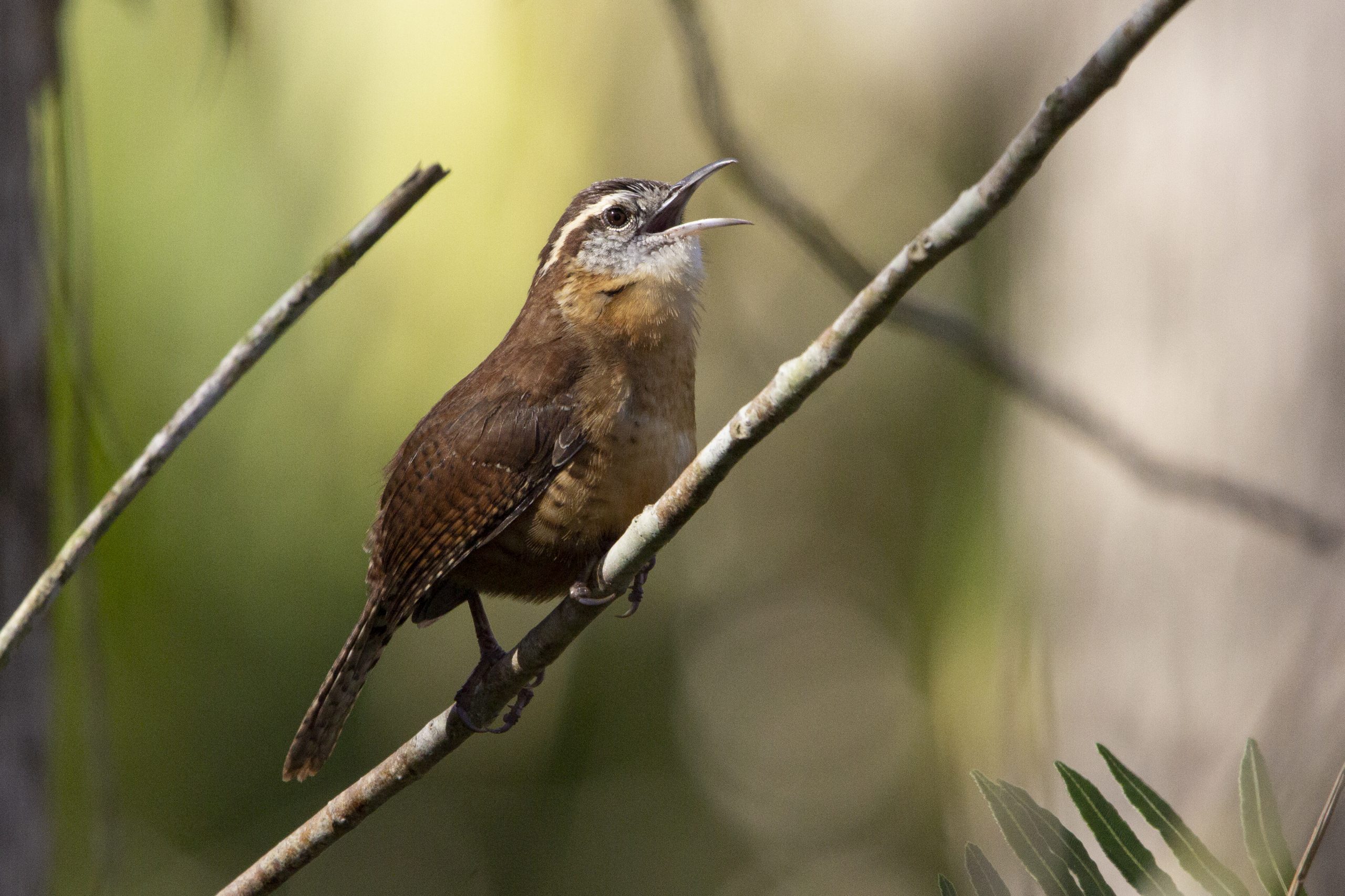
Carolina wren: Medium size bird with a brown crown, white throat, buff-colored or white underparts, rufous-colored back and wings and a distinctive white stripe above the eye. Once paired, they define and maintain a territory and stay together for several years. They raise multiple broods during the summer breeding season. These birds like to hang out in undergrowth and sometimes you have to identify them by their loud, distinctive song which sounds like “teakettle, teakettle, teakettle” or “cherry, cherry, cherry.”

CREW Bird Rookery Swamp

Snowy egret: A small white heron with black legs and a long black bill with a yellow patch at its base; yellow feet (think of them as yellow snow boots to remember their name). At one time the plumes of the snowy egret were in demand to decorate women’s hats and plume hunters decimated their numbers, but now protected by the Migratory Bird Treaty Act and their population has rebounded. Snowy egrets wade in shallow water to spear fish and other small aquatic animals.     

Northern parula: Small, compact warbler with blue-gray upper parts and bronze-green back patch. Throat and breast are yellow and belly is white. Winters in southwest Florida. The northern parula feeds on insects and invertebrates; occasionally hovers or hangs upside down on foliage to catch insects in the air. Its song is an ascending “zeeeee-yip”. Fairly common in Bird Rookery Swamp, less common in other parts of CREW, because it prefers the swampy, forested habitat.  

Green heron: Small heron with a glossy, greenish cap and back. Its wings are gray-black grading into green or blue, and it has a chestnut-colored neck with a white stripe. Active during the day, it walks slowly or stands motionless in water to wait for prey, and then it strikes quickly with its daggerlike bill. This heron has been seen to place food in the water to attract fish. Sometimes you’ll see them perched in trees and shrubs. 

CREW Flint Pen Strand

Bald eagle: The bald eagle is the star of the show at Flint Pen Strand, larger and more impressive than other raptors found there. Most of us are familiar with its distinctive look – white head, neck and tail, big yellow bill and dark brown body. Swooping over water, it hunts its favorite prey – fish – and its strong hind talon pierces the fish while the front talons hold the fish securely. Its wing span is six to seven feet. A pair of bald eagles has been nesting around the eastern side of Flint Pen Strand for some years, and lucky hikers are occasionally treated to the sight of a bald eagle soaring overhead.     

Eastern bluebird: Brilliant blue back and wings, with a rusty breast and white underparts. Often seen in open woodlands and clearings; look for them in the northeast corner of the lakes area. It makes its loose nest of grass or plant stems in natural tree cavities, even in abandoned woodpecker holes. Its population declined by 90% in the last century, partly because as trees are felled, it loses its favorite nesting sites. Bird boxes have helped restore the population. 

Woodpeckers: Woodpeckers of all kinds are year-round residents, including red-bellied, downy, pileated and sapsucker woodpeckers. Most remarkable is a sizable population of red-headed woodpeckers, with their solid red heads, black wings and white wing bars. You’ll see them near the southern portion of the red trail, usually hunting insects on dead trees.

Some hints for beginning birders:

Invest in a pair of binoculars and learn how to use them; take along a good field guide like Sibley’s Bird Basics, which will teach you how to identify birds by characteristics; download a good bird identification app like the Audubon Bird Guide and eBird; wear dull, neutral colors to blend into the natural background; and respect nature – don’t step off the trail to get a good picture, and don’t harass birds. If you can, tag along with an experienced birder and don’t be afraid to ask for advice. If you want to start and keep a list of birds you’ve observed, there are many apps that provide guidance and allow you to keep your list on your phone.

More resources on birds:

Cornell Ornithology Lab maintains a web site called “All About Birds” which covers just about everything you need to know to get started and develop your skills. A particularly useful book for this region is Birds of Florida by Fred J. Alsop III. And here’s a cool website:  https://birdcast.info/migration-tools/, where you can follow bird migration in real time all over the U.S.

Please share your best bird photos with the CREW community, on our CREW Land & Water Trust Facebook page or send them directly to Allison@CREWTrust.org.     

Many thanks to knowledgeable birders who contributed to this piece: Jayne Johnston, former education coordinator, CREW Land & Water Trust; Dick Brewer, volunteer naturalist and brilliant citizen scientist; Barbara Centola, CREW Trust volunteer and birder extraordinaire; and Kathleen Smith and Lauren Plussa, biologists with the Florida Fish and Wildlife Conservation Commission. 

Early Settlers in CREW

Europeans & Early American Settlers, the history of land use and its effect on our water resources and wildlife in CREW
Lakes of Flint Pen Strand

Water management in Florida today has evolved from the lessons of the past, as well as from changing philosophies about natural resources and the environment. Early Native Americans in Florida altered the land by building settlements, cultivating fields, building mounds, establishing transportation routes, and digging canals and fish ponds. European explorers and settlers arrived in the 1500s, but much of Florida, particularly the central and southern regions, remained relatively undeveloped until the last decades of the 19th century. Significant increases in population and tourism were contemporaneous with new development and developers directly and indirectly caused significant changes to the natural landscape and resources of the state (Purdum et al.).

Europeans & early American settlers:

The history of Florida’s human settlement for most of the past 14,000 years has been shaped by water. When Spanish explorers arrived in Florida in the 1500s, an estimated 350,000 Native Americans were living throughout the state almost exclusively near water filled regions (Bureau of Archaeological Research). At the time of the European contact in the late 16th century, the Spaniards identified the people of Southwest Florida as the Calusa. The Calusa occupied the coastal zone, however their political influence and trade network extended inland to the Lake Okeechobee basin.

Settlement of Lee County really began in the years following the Civil War. Government land surveys seeking out areas for settlement were also completed during this period, although CREW area surveys were left incomplete due to the “impracticable” nature of the swamp. Ultimately, even though people had lived in Florida for thousands of years prior to 1900, their overall impact had been minimal.

Lakes of Flint Pen Strand where majority of research was conducted. Photo by John Lane

Historical & archaeological research at CREW:

Archaeological research on the CREW lands, which includes approximately 60,000 acres, have uncovered no prehistoric or historic artifacts (Halperin et al.). However, archaeologically significant sites were identified adjacent to the CREW lands near Lake Trafford and several potential sites with historical resources were identified within the CREW project. Even though archaeological research uncovered no diagnostic artifacts and given the limited excavation done, it is reasonable to assume CREW would have been used for hunting and gathering activity by prehistoric peoples. Feel free to contact the CREW Trust or the Bureau of Archaeological Research if you discover a possible historical/archaeological site.

The early 1940s aerial photographs show limited cultural activity within the CREW project and by the 1970s, only a partial ditch system was in place. The Flint Pen Strand canals were more recently constructed, as evidenced by the dirt and rubble leftover from excavation. Some time after 1970, 12 to 15 homesteads were established in the slightly higher eastern part of the CREW project. The sites appear to have been selected based on slight elevations and access via the dirt trails. Almost nothing remains of these homesteads except abandoned power poles and a thin scatter of debris (Halperin et al.). 

In 2010, the South Florida Water Management District (SFWMD) began steps to restore hydrologic functions within the CREW Flint Pen Strand area (Blog: History of  Flint Pen Strand: Part Two), just another example of Floridians actively seeking ways to preserve, protect and restore water resources in more recent years.

Environmental choices & change:

Since 1900, Florida has seen substantial changes in land and water use. General consensus viewed Florida as having too much water and as a result, many Floridians were focused on drainage, flood control and navigation (Purdum et al.). Historically, water resources were seen primarily for human use and therefore were controlled and modified to suit our needs. Now, the value and sustainability of our finite water resources are clear. Land managers (SFWMD) today are concerned with water quality protection, water supply and ensuring natural places like the CREW watershed are under protection and preserved for future generations (Purdum et al.). 

Bibliography

Halperin, Christina, et al. “Cultural Resources Survey of the Corkscrew Marsh Tract of the Corkscrew Regional Ecosystem Watershed, Collier County, Florida.” C.A.R.L. Archaeological Survey, vol. Bureau of Archaeological Research, no. June, 2002, p. 42.

Purdum, Elizabeth D., et al. “Florida Waters.” A Water Resources Manual from Florida’s Water Management Districts, vol. Florida Water Management District, no. 1, 2002, p. 120.

Stop and Smell the Wildflowers at CREW!

by Nan Mattingly, CREW Trust Volunteer

Here in southwest Florida we have the luxury of enjoying wildflowers year-round. October is a good time to bask in the colors and elegant shapes of all kinds of wildflowers. Look at this stunning October standout:

photos of pine lily

You’re likely to see this two-foot slender stalk topped by a single bloom in pine woods and savannas. It grows from a bulb that can lie dormant for years and suddenly appear after a fire. Its vivid color will draw your eye to it as you walk many of the CREW trails. Last year was a particularly good year for pine lilies – we had a wealth of them at the CREW Marsh Trails. Please don’t be tempted to take one home – leave it for others to enjoy.

photos of Chapman’s blazing star

Another striking flower that will catch your eye with its light-lavender colored blooms is one of the many varieties of liatris, a member of the aster family found in North America. In southwest Florida, there are a few varieties of liatris, but you’re mostly likely to find “Chapman’s blazing star” at CREW, a plant that typically features five or six spiky blooms on one plant. It’s another flower that blooms well after a fire, and it makes a great pollinator food source, attracting a profusion of butterflies, bees and even hummingbirds. 

photos of Florida paintbrush

photos of green lynx spider

This showy violet-colored flower resembles an artist’s paintbrush. Its large flat-topped blooms are incredibly attractive to butterflies and other pollinators. If you’re lucky, you might spot amongst its fluffy clusters a green lynx spider, who prey on the insects attracted to the bloom.

photos of lopsided indiangrass in bloom

photos of a skipper butterfly

When you visit one of the four CREW trails, don’t overlook the grasses. Lopsided Indiangrass is not very distinguished in summer but in fall it produces tall, dramatic flower spikes that last a few weeks. It’s called “lopsided” because the tufts grow on only one side of the stem. Look for this grass in sandy soil and dry flatwoods. Its soft yellow appearance attracts several species of skipper butterflies.    

photos of sugarcane plumegrass

photo of clouded skipper butterfly

Another tall grass that blooms in fall, sugarcane plumegrass is topped by golden plumes. It can reach 30 feet in the open but it’s more typically no more than eight feet tall on any of the CREW trails. Sugarcane plumegrass likes our trails that border the sawgrass marsh habitats. It’s also a favorite host for the clouded skipper butterfly.     

In October, Brenda Thomas, director of the University Colloquium at Florida Gulf Coast University (FGCU), will share her knowledge of and love for wildflowers on a special tour at the CREW Marsh Trails. Unfortunately, that tour is already sold out, but you can visit any of the CREW trail systems in October to experience your own wildflower walk. Take photos of your favorites and share them with us on Facebook and Instagram! 

Wildflower photos taken throughout CREW this Fall

Consider a “Wet Walk”

By Allison Vincent, CREW Trust Communications Director

Hiking out on the CREW trails can have a transformative effect, especially during the rainy season. Traversing wet trails evokes something deep within us, an urge to take the road less travelled, to walk quietly in the woods hearing the twigs snap underfoot.

Perhaps it’s some childhood nostalgia that transfixes us. Given the chance to have uninterrupted time in a wild place filled with trees, pools of water, and hidden places can fine tune the ear to the sound of animal footsteps or the wings of a bird.

Even still, some hikers avoid the trails during the rainy season, but why? Let go of having dry shoes and enjoy the cool clear puddles after a rain storm or wade into the tannin-rich tea-colored water on a hot day! Once you make your first satisfying splash there is no turning back!

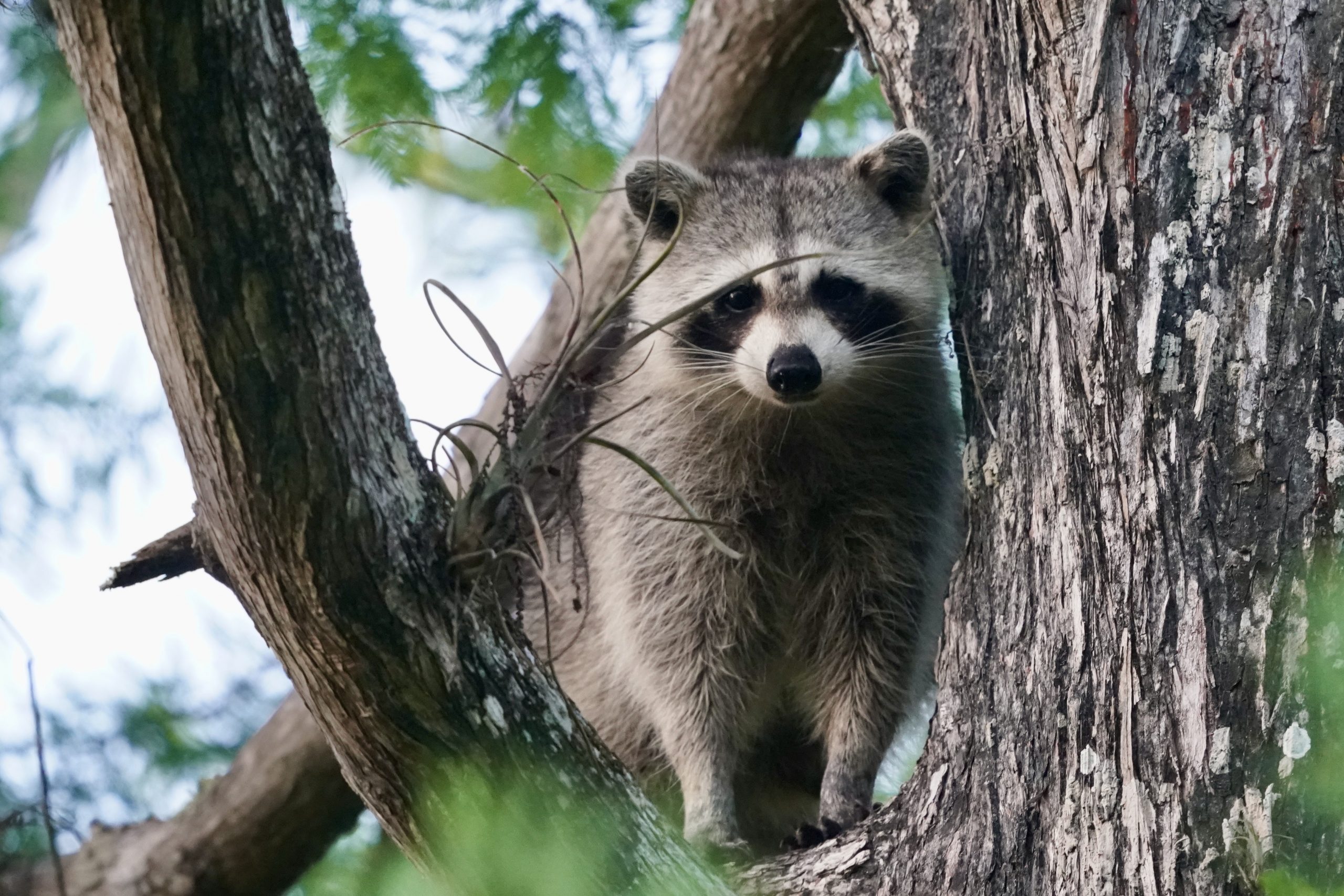
Another highlight of the rainy season is finding animal tracks in the mud. Our game camera footage and years of wildlife monitoring have shown that many crepuscular creatures are most active in the early dawn and twilight hours before dusk.

Many of the wildlife that call CREW home are elusive but like us all, leave footprints behind. So remember next time you’re on the trail, there is a chance you are walking the same path a wild creature strolled a few hours earlier. Check in the mud, you may catch the outline of a print!