Donors of $150will be entered into a drawing for a variety of nature-related books
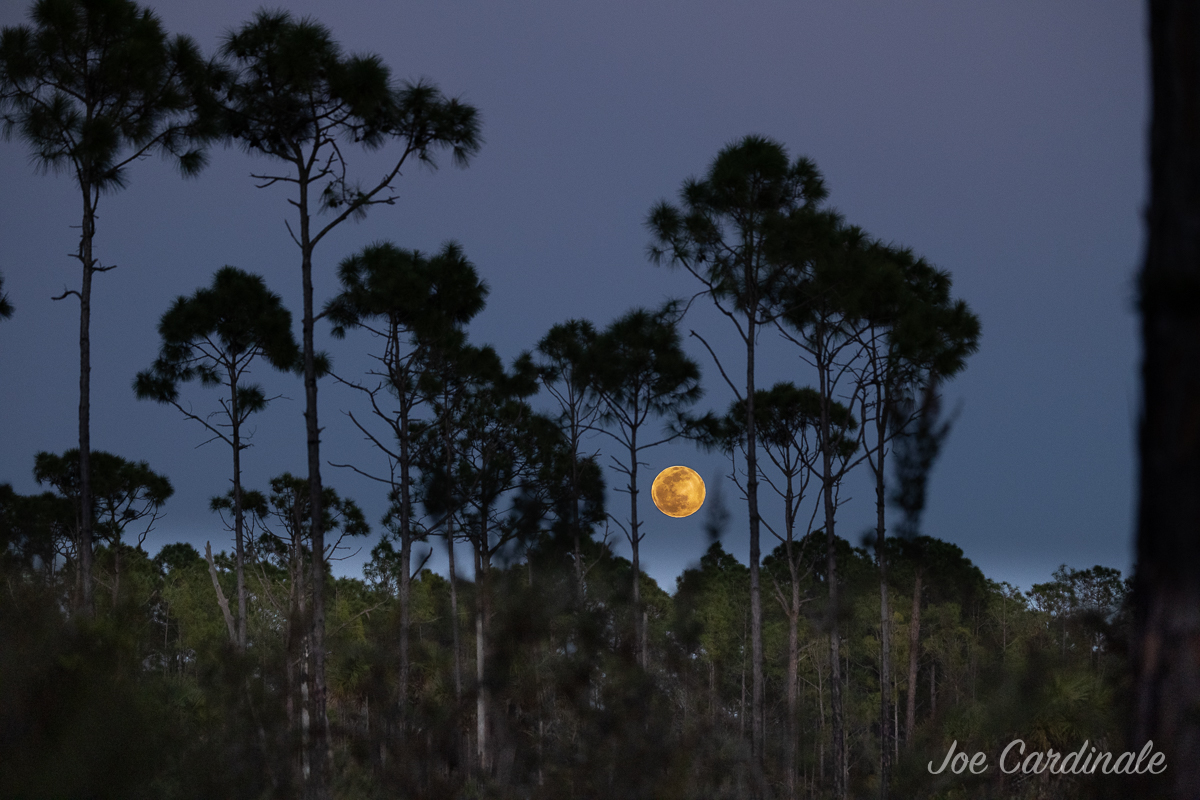
All donors of $25 or more will receive a link to a special set of CREW Wildlife photos taken by some of the best photographers in the area.
Your gift is an investment in the future of southwest Florida – helping us to provide more high quality environmental education experiences for people of all ages! With over 42,000 annual visitors to the CREW trails, there is much more to be done.
Help us make a difference. Give big. Give small. But give today.
The CREW Land & Water Trust will hold its Board of Trustees meeting Friday, January 23, 2015 from 9:00 AM to noon at the Estero Community Center, 9200 Corkscrew Palms Blvd., Estero, FL 33928.
CREW Trust members and other interested parties are welcome to attend. Come out and learn more about your local community. The full CREW Trust Board only meets three times per year.
This plant, with its feathery foliage and towering stature, grows alongside the trail out at the CREW Marsh Trails. The trails get a lot of visitors this time of year, especially 3rd graders from Collier County as part of their field trips to CREW. Schoolchildren visit CREW with their teachers and spend half of their morning on a nature hike, guided by our very own Jessi Drummond, who leads them through stops that feature explanations about prescribed burns, how to identify poison ivy and why it’s an important food source for deer, and even, if they are lucky, investigating scat (most often Bobcat scat). The other half of their field trip is spent dip netting and identifying the different living organisms in their water samples. The kids then have lunch, and leave- hopefully- with a pretty clear idea of why the watershed is important, with discussions that focus on habitat, the water cycle, and how the marshlands help clean our water.
This plant that is pictured above is one of our sensory teaching tools. Jessi stops with the students, takes off a few leaves, and passes them around to the students. “What do you smell?” she asks as little hands eagerly shoot up in the air. The students share that they smell everything from licorice to mint, and Jessi then lets them know that she smells pickles when she smells this plant which is Dog Fennel. Tying in their senses- hearing, touch, smell, sight- is an important part of the field trip for so many kids who just don’t spend enough time outside.
Education is a very important part of our mission at CREW, and this year, we’ve got a fundraising campaign for the month of December. Our goal is to raise $25,000, and an end-of-year gift from you, our supporters and members, can make that happen. It’s part of #GivingTuesday, an effort by many non-profits nationwide to remind everyone that after Black Friday and Cyper Monday, sometimes it’s nice to find a way to give back and pay it forward. Your donation will help further our education efforts at CREW and support all of our educational programs, including our field trips.
You can find out more about our #GivingTuesday campaign on our website (https://crewtrus.mystagingwebsite.com/2014/11/10/6996/). All donors receive a link to a special set of photographs of our CREW wildlife and donors at higher levels can receive special goodies, like tickets to our Concert and Silent Eco-Auction in March.
Next time you are out on the CREW Marsh Trails, watch out for the Dog Fennel, and take a moment to appreciate how this plant on the side of the trail has such a huge impact on 3rd graders in Collier County.
Q: Are African honey bees here? Are they dangerous?
A colony of African honey bees chose to settle on a high tree limb along the Marsh Trail, where they do not pose a threat.
A: According to Dr. Jamie Ellis, entomologist at the University of Florida, approximately eight out of ten wild honey bee colonies in Florida south of a line from Tampa to Daytona are the African honey bees, often referred to as the killer bees.
No honey bees are native to North or South America. European settlers brought a temperate European subspecies with them when they colonized the Western hemisphere, and that species is the common honey bee. The African honey bee was first imported to Brazil in the 1970s by a beekeeper hoping that using a tropical subspecies from Africa would provide more productive honey producers in tropical Brazil.
Escaped queens enabled the subspecies to spread across South America, Central America, and the southern and southwestern United States in just 30 years. It is the most biological successful invasive species.
There are no visual differences between the European and African honey bees. The African honey bee is slightly smaller and has slightly less venom, but the two are so close that the only way to distinguish them individually is to send a sample to the University of Florida’s
lab for dissection.
Both subspecies defend the territory around their colonies, which is the only time the bees will be aggressive as a group. But when a European colony is disturbed, on average only 10-15 bees attack. When an African colony is disturbed, 10,000-12,000 bees attack.
Bees in a colony can detect vibrations in the ground up to 50 feet away from the actual colony, and the African bees can detect vibrations from heavy machinery such as tractors up to 100 feet away. However, colonies located more than 30 feet above the ground do not
usually pose any sort of risk.
When bees attack, it is always to defend the colony. Dr. Ellis said that the ONLY defense is to run away as fast as possible. Once out of the bees’ territory, the attack stops. Several dozen stings will be painful but not lethal.
Running is the only defense, and most people can outrun a bee. Do not stay and swat! The colony is probably close and attacking bees are attracted to movement, so swatting just attracts more bees. Don’t hide in underbrush because the bees can fit in there too, and don’t jump in water. Bees may stay agitated for up to 30 minutes after the colony is
disturbed, which is a lot longer than people can hold their breath under water.
If an attack occurs, survival is the only concern. It takes 5-10 stings per pound of body weight before the attack may be lethal, so barring allergies to bee stings, a 100-pound person could survive up to 1,000 stings.
Seek shelter in a building or vehicle. Some stinging bees may make it in too, but the number will be limited and once they sting, they die. If you see someone else being attacked, yell at them to RUN. If they don’t, do not try a rescue yourself because then there would be two
victims instead of one. Call 911.
Eagle Scout candidate Steven Rapp is on a mission. He’s planning to build a viewing platform with handicap accessibility at the Bird Rookery Swamp parking area. His project, called A View for All, includes a flat platform that extends over the pond near the parking lot, providing easy access from the handicap parking spaces onto the platform for visitors with disabilities to be able to get close and view the birds and other wildlife that frequent Bird Rookery.
As an eagle scout candidate, Steven must prepare the design, get all the appropriate permits, recruit volunteers to do the labor, and raise funds for materials for the project.
Part of his fundraising strategy includes a Car Wash scheduled for Saturday, December 6th, 2014 from 8 AM to noon at G’s General Storeat the corner of Oil Well Road and Immokalee Road in Naples. The requested donation/cost is $5.00 per car wash.
So, come on out and support this great project and help Steven create “A View for All” at Bird Rookery Swamp!
Description of and rationale for the project by Steven RappPlatform design
Today November 6th 2014 a group of wonderful Florida Gulf Coast Students (FGCU) helped CREW Trust staff install number markers for the first self-guided tour for the Cypress Dome Trails. The FGCU students are currently taking Colloquium with Brenda Thomas (our wildflower expert). Their Service-learning project was to work with CREW Staff to upgrade and clean-up our hiking trails. We had a beautiful morning walking the 6 mile trail completing the yellow, green, and white loop.
The Cypress Dome Trails opened in 2008 and since then we have added benches, bird houses, short cuts, and now a numbered self-guided tour. The self-guided tour brochure was also created by a group of FGCU students for their Civic-engagement class. You do not have to do the numbers in order, just have fun reading the descriptions and observe.
Now visitors can download the self-guided tour map and brochure by scanning a QR code at the trail head or visiting this link before you hit the trails. Enjoy and discover the Cypress Dome Trails at your own pace.
*Give it a try and tell us what you think by commenting below.
The CREW Land & Water Trust elected five new Trustees to its board at their May 9, 2014 Trustees Meeting. CREW welcomes:
Dennis Gilkey of Gilkey Organization, LLC
Steve Kissingerof Children’s Advocacy Center
John Mathes of Mathes Realty Appraisal and Board member of Bonita Springs Utilities
Bob Rosier, of Rosier Insurance
Laurel Smith of Gravina, Smith, Matte & Arnold Marketing & Public Relations firm
These new Trustees bring valuable business and non-profit experience and insight to the CREW Trust Board. We thank them for volunteering their talent and time, and we look forward to working closely with each of them.
The CREW Land & Water Trust is pleased to announce new 4th Saturday Guided Walks at the Bird Rookery Swamp this summer. 4th SaturdayWalks at Bird Rookery Swamp are offered FREE of charge on the 4th Saturday of each month, May through August. Join CREW Land & Water Trust volunteer naturalists, George Luther and Bob Melin, for an entertaining and informative 2.5-hour guided walk on a portion of the CREW Bird Rookery Swamp trails near Naples, FL.
Walks are open to the first 24 people who register. Walk-ins are welcome if space is available on the day of the walk. Registration for 4th Saturday Walks is online at http://goo.gl/IHpbTA
Eagle Scout candidate, Kevin Link, completed an outstanding project at the CREW Cypress Dome Trails last week. Here, he shares some of the process via video. Thanks to Kevin and all of his team for an extraordinary project to help beautify and provide shade and seating at the Cypress Dome Trailhead and parking area and to help educate people about native plants and landscaping.
CREW’s Nature’s Peace at CREW walk for Alzheimer’s patients is highlighted in a Fort Myers News-Press article today! Thanks to George and Susan Luther for putting this program together and making it happen!