Trees – why do we love them?

photo by Anthony Eugenio

Volunteer Perspective Series

Written by Nan Mattingly

          In the 60,000-acre Corkscrew Regional Ecosystem Watershed (CREW) Project, you’ll find a wide variety of trees. The stars of the show are bald cypresses that dominate Bird Rookery Swamp and slash pines found throughout the CREW Project, as well as red maples that provide vivid color to the predominantly green and brown landscape. Of course, you’ll also see many sabal (or cabbage) palms, our state tree. All of the trees in CREW help filter and protect the water that soaks into the aquifer that spans Lee and Collier counties. This aquifer stores the water that we need for just about every aspect of life in southwest Florida.

          Aside from their contribution to our vital water supply, trees in the CREW Project also provide a myriad of less visible services that enrich and improve our environment. Some of those services are:

  • Natural air conditioning: when you walk under a canopy of mature trees (which you’ll find in all four CREW trail systems) you immediately notice a drop in temperature, as much as six to eight degrees. That’s a real gift in the summer months. (Trees strategically planted to shade your house can lower your electric bill by as much as 15 %.)
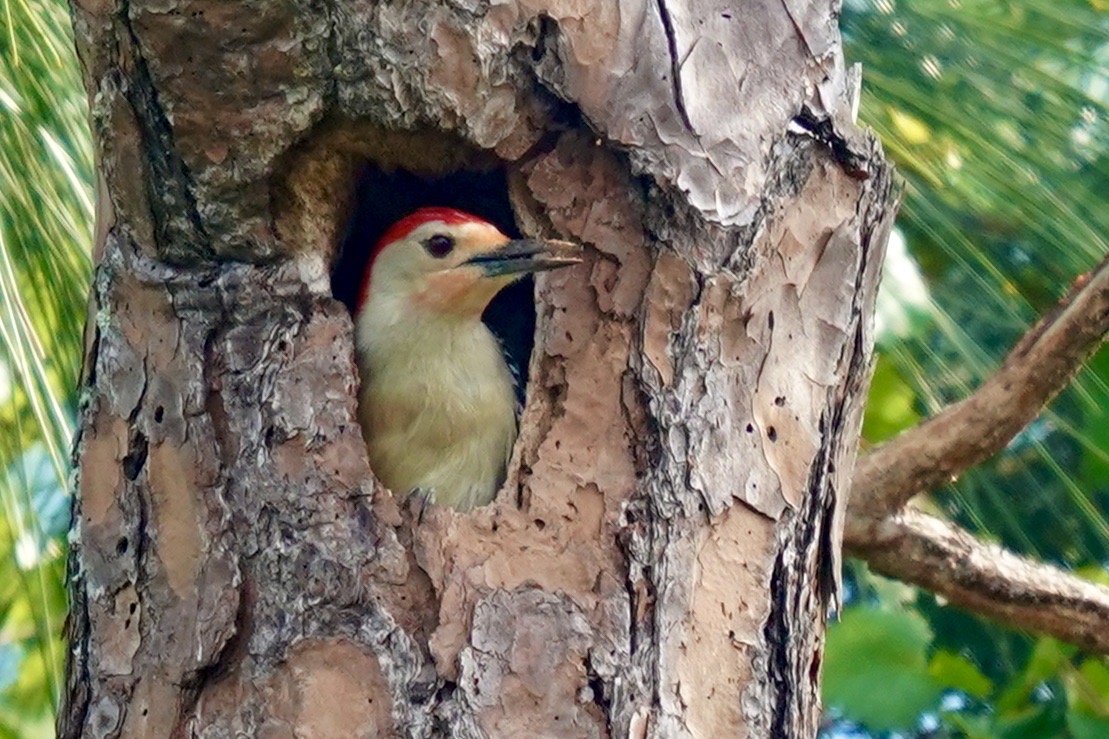
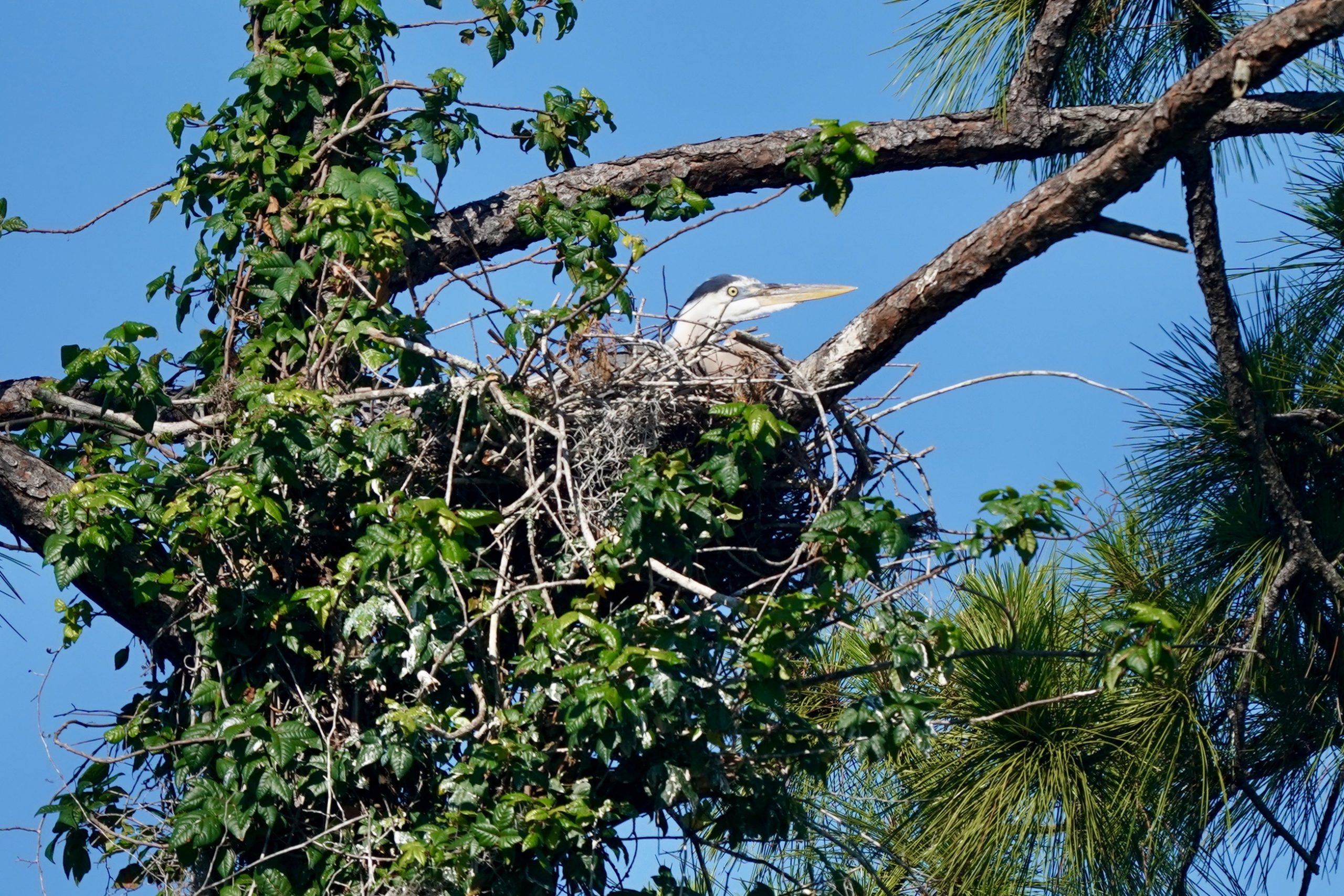
  • Habitat for wildlife: bird watchers can delight in the variety of birds on show among the trees, from colorful songbirds to impressive raptors (hawks, vultures, crested caracaras, etc.) to charming wading birds such as great blue herons, ibises, and egrets. CREW lands also attract fascinating seasonal visitors such as swallow-tailed kites and wood storks. Florida panthers, bears, bobcats and others rely on heavily forested areas for concealment of their dens and for hunting grounds. And if you see a mature tree that is missing a long chunk of its bark, bears may have been using that tree to scratch their backs.        
  • Capture and storage of carbon dioxide emissions: trees are the most efficient carbon capture machines in the world. Through photosynthesis, trees absorb carbon dioxide and store it in their leaves, stems and roots. That carbon provides some of the energy that trees need to grow and leaf out. Carbon dioxide traps heat in the environment, so the trees in CREW can help lower the temperature in surrounding areas. According to the Environmental Protection Agency, all the vegetation in the U.S. (especially trees) absorbed 11 % of carbon emissions in 2017.         
  • Rich, refreshing environment for hikers: CREW offers four trail systems, all of which feature some trails that are lined and shaded by mature trees. When you’ve hiked deep into the woods, the lush, cool and green atmosphere created by trees is more invigorating than a session at the gym and more reassuring than a session with a therapist.

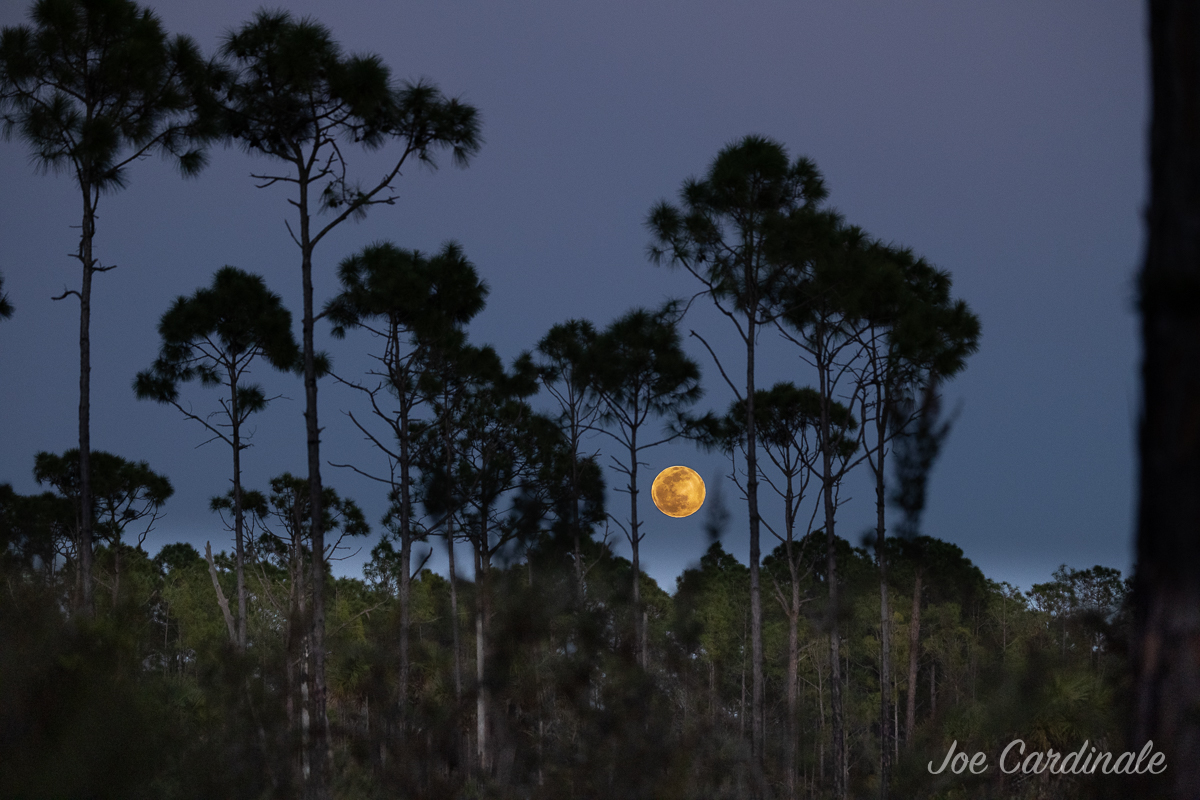
          All of these practical reasons for appreciating trees are sensible and important. But it may be the natural grace and beauty of trees that most attracts us to them.

At Home with the Florida Duck

Volunteer Perspective Series

Written by Nan Mattingly

How Florida mottled ducklings helped this CREW Trust volunteer survive quarantine.

Before the governor of Florida imposed a safer-at-home order, I had been experiencing flu symptoms and decided to self-quarantine. So I’ve been pretty isolated since early March.

Fortunately my house is situated on the edge of a fairly large lake, so I’ve long been in the habit of watching activity on the lake. Herons of all types come here to work the banks for small fish; anhingas dive for fish, which are plentiful, and then alight on the banks to dry out their feathers; occasionally I see an osprey snatch up a fish and run; and from time to time I watch long-time resident Wally Gator make his stately way up and down the lake. And of course we have the requisite Muscovy duck population, begging at doors for bread and showing off their unique brand of ugliness. 

Right about the time I decided to voluntarily quarantine and cope with what felt like murderous viral symptoms, a miracle occurred: a pair of Florida mottled ducks emerged on my lake with a brood of ten tiny ducklings, just little balls of downy feathers. Though their nest wasn’t very near my house, the whole group took to hanging around my neighbor’s house and mine. Before they showed up, I had only a casual interest in ducks (and a decided dislike for Muscovys). Virus fatigue and a lack of other distractions, I guess, allowed me to become fascinated with the mottled family. Now, about two months after their debut, the ducklings are still a mob of ten and the parents are nowhere to be seen. How they evaded predators is a mystery. Over time I’ve had the privilege of watching them grow, develop their voices, and learn to fly. At the end of May, they’re still there, and behaving like adolescents – chasing each other around, pecking each other on the head and occasionally making test flights across the lake.

Once the little ducklings had attracted my feeble attention, I developed the habit of looking out at the lake first thing every morning to check on them. They tended to arrive in my backyard around 6:30 a.m. Until a few weeks ago, they made tiny little peeping noises, which were charming, but unfortunately they are now developing that distinctive duck voice. On Memorial Day I was awakened early by a chorus of quacking before they did a very patriotic flyover of my lanai.   

Anticipating the sad day that my ducklings depart for bigger things, I checked the FWC website to learn when I can expect to become an empty-nester. It was mostly good news. First, I learned that we in south Florida have the pleasure of hosting these ducks year-round; they tend to live south of Tampa and are non-migratory. They are a member of what is called “the mallard complex” which includes about 20 species of ducks, all alike in body shape but distinguished by their feather characteristics and colors. FWC noted that the Florida mottled duck is also known as the “Florida duck” or the “Florida mallard” because they are found only in Florida.  

Some people might find a mottled duck’s grey and brown coloring a little boring compared to the mallard, which I now consider to be the designer version of mottled ducks. The mallard has that showy display of teal bordered with white on their wings. Mottled ducks, male and female, have a more subtle version of that coloring on the wings with almost no white showing.  

There’s little difference in coloring between male and female mottled ducks, so you have to look at the bills to distinguish them. The male has an olive green-to-yellow bill while the female has an orange-to-brown bill. 

Watching the ducklings peck in the grass and dip their bills into the water, I tried to figure out what they were eating. FWC supplied the answer: about 40 percent of their diet comprises insects, snails, mollusks, crayfish and small fish. For the other 60 percent, they eat grass seeds, stems and roots, the seeds of other marsh plants, and bayberries.

I knew that my particular ducklings were special not only for their  survival skills and playful personalities, but according to FWC, a female produces only one brood a year and typically lays eight to ten eggs. The mother of my ducklings must have produced a pretty big clutch of eggs, and she must have protected them well. For the first two months or so, the parents hovered over the ducklings and shepherded them around the lake, giving them a good start in life.

It’s not all good news for the Florida mottled duck, however. Go to the FWC website and read about the challenges to the long-term survival of our unique south Florida duck. Loss of wetland habitat, of course, is a big threat. And what FWC calls “feral mallards” have been mating with mottled ducks and producing hybrid offspring. 

Having relied on my mottled ducklings to keep me distracted and happy during a tedious quarantine, I’m sorry to contemplate the threats to this special south Florida dabbling duck. We’re still looking for a cure for Covid-19. Watching ducks grow up won’t cure anyone, but it’s a great distraction. Today I’m as healthy as those ten beautiful mottled ducks, and I thank them. 

North American Model of Wildlife Conservation

CREW Education Series

by Jayne Johnston, CREW Trust Education Coordinator

photo by Bill Zaino

In this series, we will cover a variety of topics related to the wildlife of the CREW Project. While the main focus and priority is always water for people, it is also a special place where our wildlife benefit from the water and space provided, too. First in this series –  how wildlife is conserved in the United States.

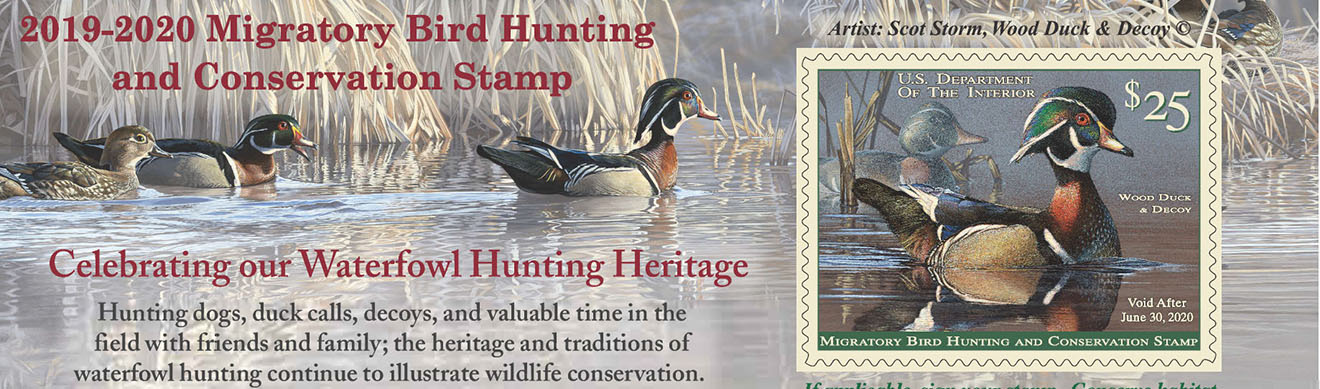
During the settlement of the United States, wildlife harvest was unregulated. As the country grew in size and population, overharvesting coupled with habitat loss to development and agriculture made a significant impact on wildlife populations. The decline became evident enough by the late 1800s that the 1900s ushered in a new wildlife ethic. Federal laws were passed – Migratory Bird Treaty Act of 1918, Migratory Bird Hunting and Conservation Stamp Act of 1934, Federal Aid in Wildlife Restoration Act of 1937, and Federal Aid in Sport Fish Restoration Act of 1950. These pillars of wildlife legislation were made possible by engaged citizens, just like CREW came to be through similar efforts. These laws formed the foundation of what biologists and policymakers follow as a guide to wildlife management – the North American Model of Wildlife Conservation. Here are its seven principles:

  1. Wildlife is a public resource. Wildlife is treated separately from other resources like water and land.
  2. Markets for game were eliminated. Commercial wildlife harvest decimated wildlife populations. Southwest Florida was known as the heart of the plume (feather) trade for women’s hats. Legislation and the Audubon Society put an end to the devastation of bird rookeries (bird nurseries) that could be found at the CREW Bird Rookery Swamp.
  3. Allocation of wildlife by law. Think of hunting regulation with its seasons, bag limit, and types of species allowed. The Florida Fish and Wildlife Conservation Commission (FWC) oversees these efforts at the CREW Project through onsite law enforcement and biologists. 
  4. Wildlife can only be killed for a legitimate purpose. Purposeful hunting prevents waste and needless death. 
  5. Wildlife species are considered an international resource. We are fortunate at CREW to see so many migratory birds from Canada and South America. Swallow-tailed kites arrive from South America to nest here and warblers from Canada visit CREW after their summer nesting season. The Migratory Bird Treaty Act and CITES guide how these resources are shared among the U.S., Canada, and beyond.
  6. Science is the proper tool for discharge of wildlife policy. Sound science – population counts, species research, biological inquiry –  helps governments design wildlife hunting regulations (lowest protections afforded wildlife like for deer and turkey) up to federal protections as endangered wildlife (strongest protections afforded wildlife like for Florida panthers and Eastern indigo snakes) The democracy of hunting. Access to wildlife is for all!

While we lost the Caribbean monk seal, Carolina parakeet, (yes, Florida used to have its own native seal and parakeet) and Passenger pigeon, we recovered the American alligator, White-tailed deer, and Wild turkey. We are attempting to recover the Florida panther, Crested caracara, and Gopher tortoise. The model works! You can find alligators, deer, turkey, panthers, caracara, tortoises and others at CREW. You can also help wildlife through purchases of hunting and fishing licenses (referred to as consumptive use – people consume their harvest), the abundance of specialty license plates that support wildlife recovery efforts, or by supporting our partners if not a hunter (referred to as non-consumptive use like wildlife viewing and hiking) – the South Florida Water Management District (SFWMD) and the Florida Fish and Wildlife Conservation Commission (FWC) and by supporting the CREW Trust through memberships, donations, and volunteer service.

Earth Day April 22, 2020

For the 50th anniversary of Earth Day remember the phrase: “think globally, act locally” with these Citizen Science projects you can start today in your own backyard!

Nature’s Notebook

Discover and document changes in nature near you. Nature’s Notebook is an off-the-shelf program appropriate for scientists and non-scientists alike, engaging observers across the nation to collect phenology observations on both plants and animals.

Globe at Night Globe at Night is an international citizen-science campaign to raise public awareness of the impact of light pollution by inviting citizen-scientists to measure & submit their night sky brightness observations. It’s easy to get involved – all you need is a computer or smartphone & follow these 5 Simple Steps!

Collect Weather Data CoCoRaHS (pronounced KO-ko-rozz) is a grassroots volunteer network of backyard weather observers of all ages and backgrounds working together to measure and map precipitation (rain, hail and snow) in their local communities.

BioBlitz A BioBlitz is an event that focuses on finding and identifying as many species as possible in a specific area over a short period of time. At a BioBlitz, scientists, families, students, teachers, and other community members work together to get a snapshot of an area’s biodiversity.

Snake Sticks

Written by Allison Vincent, communications director

Starting a new job can be challenging. The first year of work is like an anthropological research project, studying the behaviors of a faraway culture. Many things are ordinary; check email, print labels, write blog posts etc.. but some things are exciting and new, like hiking down long trails alone early in the morning. 

I’ve never really hiked alone and I find the experience makes me feel both mindful and vigilant. I can’t tell you the number of times I’ve frozen mid-step to over-analyze a crooked stick down the trail from me to make sure it’s not a snake. In fact this has happened enough times that I’ve taken to calling them snake sticks, out of respect. Before moving on, I should add that I like snakes but didn’t come across quite so many of them in previous position. 

These wriggly wandering sticks have done more than stop me in my tracks. They’ve helped me realize that my overactive imagination has resulted in many animal misidentifications. For my first few weeks at CREW whenever I would simultaneously see a shadowy figure in the palmettos and hear the crunchy noise of foot-steps I’d automatically assume it was a bear or panther too close for my comfort. There’s been more than one instance when I’ve started whistling or said something original like, “Hey, Bear! Or whatever you are, I’m walking here”.

Thankfully, with time on the trails during these purposeful work-hikes I’ve come to accept many of my false assumptions about wildlife. Now I expertly breeze past snake sticks without a missed step and huff at shadowy palmetto bushes. I know where to look for the wispy pink flag that marks the entrance to check the water gauge, a regular job detail during the rainy season. I carefully move the oak tree limbs aside to find the single-file path that wanders through tall grasses to find a post that marks the water depth and I think, ‘This is an awesome job’.

Bears are more active in the fall

Originally posted by the Florida Fish & Wildlife Conservation Commission sent this bulletin on 09/09/2019 12:47 PM EDT

Photos: https://www.flickr.com/gp/myfwcmedia/FA6v41

B-roll video: https://vimeo.com/125067754

Suggested Tweet: In fall #Florida #bears are more active. @MyFWC reminds people to be BearWise https://content.govdelivery.com/accounts/FLFFWCC/bulletins/25e18bb   

Bear

Bears are more active in the fall

The Florida Fish and Wildlife Conservation Commission (FWC) is reminding people to help prevent conflicts with bears by securing garbage and other items that might attract these animals.

In the fall, Florida black bears begin preparing for the winter by consuming extra calories to pack on fat. During this time, they will eat anything that’s convenient and feeding on garbage provides more calories and less effort than foraging in the woods.

By securing your trash and other food attractants, you can help keep both people and bears safe.

To keep bears wild and away from your home, follow these simple tips:

  • Secure household garbage in a sturdy shed, garage or a wildlife-resistant container.
  • Put household garbage out on the morning of pickup rather than the night before.
  • Secure commercial garbage in bear-resistant dumpsters.
  • Protect gardens, bee yards, compost and livestock with electric fencing.
  • Encourage your homeowner’s association or local government to institute ordinances to require trash be secured from bears.
  • Feed pets indoors or bring the dishes in after feeding.
  • Clean grills and store them in a secure place.
  • Pick ripe fruit from trees and remove fallen fruit from the ground.
  • Remove wildlife and bird feeders or make them bear-resistant. See the new “Bears and Bird Feeders” video in the in the “Brochures and Videos” section at com/Bear.

It is illegal in Florida to intentionally feed bears or leave out food or garbage that will attract bears and cause human-bear conflicts. If you see or suspect someone is feeding or attracting bears, please call the FWC’s Wildlife Alert Hotline at 888-404-FWCC (3922).

You also can help people and bears stay safe by remembering to watch for bears while driving. This time of year, bears are traveling across more roads in search of food, which results in more vehicle-bear collisions. The FWC advises drivers to be aware of their surroundings as they drive in bear country, especially around dusk and dawn, and when there is forest on both sides of the road. The FWC works with Florida Department of Transportation to post bear crossing signs in areas that receive particularly high levels of vehicle-bear collisions and plan locations for wildlife underpasses to allow bears and other animals to cross safely under roadways. To learn more about how to keep people and bears safe on Florida roadways, see the “Vehicle Collisions with Bears” video at the “Brochures and Videos” section of MyFWC.com/Bear.

Go to MyFWC.com/Bear to learn more about living in bear country

Botanical Scrapbook

Before naturalists could easily hold a professional-grade camera in the palm of their hands, they would often preserve flowers and leaves in botanical scrapbooks. This practice requires patience, planning and sweat equity and serves a variety of interests, both scientific and sentimental. 

Whatever their purpose, the practice is less common these days, as we opt for a digital photograph and leave the flowers for the next nature seeker to enjoy.

On the off chance that you do not have a bookshelf full of botanical scrapbooks to peruse, I hope you enjoy reflecting on this fascinating hobby by flipping through a recently uncovered scrapbook found at our office.

These pages evoke hours spent walking through the pine flatwoods and marshy trails, gathering specimens to press and add to the collection, presumably in the comfort of home. The pages tell the story of the naturalist, finding joy achieving another seemingly small, but wholly significant goal, that of ticking-off another flower from their bucket list. Viewers may now admire the carefully clipped and photographed plants documented in this native and invasive plant collection. 

Although, rules and regulations today prohibit the collection of any plants within CREW, we do wish to honor the past. In fact, some botanical researchers still utilize this method for scholarly pursuits and I know that on occasion my son will secretly pick a flower as a gift. However, I am quick to use this as a teaching moment, letting him know that those plants are there for a reason. The bears eat the berries and the bees drink the flower’s nectar. More often than not these days, he asks for my phone to snap a picture, which I can then keep forever. 

Academics and toddlers aside, please do not pick the flowers on the CREW trails, take a picture and leave the plants for the pollinators! Although, if you’re really keen to start a scrapbook collection of your own, try growing some of the native plants you see at CREW in your own backyard, then pick and press away! 

We hope that you have enjoyed these pages digitized in honor of the plant’s beauty and also the collector’s personal investment, from what I am calling, the Blue Botanical Scrapbook. Enjoy this walk down memory lane and if you ever want to take a look through these archives in person, let me know, I’d be happy to un-shelf them for you!

One more thing. In case you’re wondering, we haven’t been able to track down who made these scrapbooks, so if you have any clues to the mystery, let us know! 

Further research

Excellent article written on this subject from the Florida Museum Herbarium and link to the preserved plant collection at University of Florida and University of South Florida.

https://www.floridamuseum.ufl.edu/science/herbarium-specimens-provide-snapshots-of-plants-past-data-for-future/

https://www.floridamuseum.ufl.edu/herbarium/

http://florida.plantatlas.usf.edu/specimen.aspx

See what’s flitting around Bird Rookery Swamp this week!

Special thanks to volunteer naturalist Dick Brewer, who regularly visits the CREW trails and compiles wildlife counts. This valuable citizen science is shared with the CREW Trust staff and our FWC biologists and helps give us a glimpse of all the wildlife using the trails.

Needham’s Skimmer, identified and photographed by Dick Brewer


Bird Rookery Swamp

Thursday, March 28 ~~ 7:25 AM – 2:10 PM

temperature: 59.3-77.8º ~~ RH 83.9-44.9%

sky: clear ~~ wind 7-12 mph

BIRDS

Common Gallinule – 1

Double-crested Cormorant – 1

Anhinga – 10

Great Blue Heron – 2

Great Egret – 12

Snowy Egret – 1

Little Blue Heron – 5

Tri-colored Heron – 1

Black-crowned Night Heron – 2

White Ibis – 72

Black Vulture – 3

Turkey Vulture – 4

Swallow-tailed Kite – 7

Red-shouldered Hawk – 23

Belted Kingfisher – 4

Red-bellied Woodpecker – 23

Downy Woodpecker – 3

Pileated Woodpecker – 5

Great-crested Flycatcher – 3

Eastern Phoebe –  1

White-eyed Vireo – 19

Blue Jay – 1

American Crow – 2

Tufted Titmouse – 9

Carolina Wren – 17

House Wren – 1

Blue-gray Gnatcatcher – 2

Gray Catbird – 13

Common Grackle – 9

Palm Warbler –  2

Northern Cardinal – 13

BUTTERFLIES

Palamedes Swallowtail – 3

Tiger Swallowtail – 1

Ruddy Daggerwing – 1

White Peacock – 61

Gulf Fritillary – 1

Phaon Crescent – 1

Tropical Checker – 3

DRAGONFLIES

Eastern Pondhawk – 72

Blue Dasher – 82

Blue Dasher, identified and photographed by Dick Brewer

Needham’s Skimmer – 18

Regal Darner – 3

Halloween Pennant – 1

Slaty Skimmer – 1

REPTILES

Alligator – 41

Brown Anole – 1

Red-bellied Turtle – 3

MAMMALS

White-tailed Deer – 1

10 Reasons we love STKs (Swallow-tailed Kites)

It is one of our favorite times of the year.

We actually look forward to the arrival of the Swallow-tailed Kites with something akin to the anticipation of a birthday or holiday.

And when the first birds arrive, the flurry of emails start as people brag about who saw the very first STK of the season.

A swallow-tailed kite soars with a frog in its talons.

We’re crazy about kites at the CREW Project and we know some of you are, too. Here are 10 reasons we love Swallow-Tailed Kites.

1 – Aerodynamics

We could watch kites soar all day long. As one of our volunteers pointed out, the entire design of the bird is aerodynamic and sleek, as if their body is made to slide right through the air. They swoop effortlessly and gracefully to grab prey and it’s while soaring that we are able to easily identify them by their long, forked tail.

2 – Migration patterns

Swallow-tailed kites migrate to Southwest Florida each year from South America to breed. We are their first stop on their winter migration and they normally arrive here in the third or fourth week of February, then gradually later through the rest of Florida, according to the Birds of North America website. Once the adults arrive, they begin gathering nesting material and prepare nests often in the same spot or vicinity as they nested the previous year. Swallow-tailed kites will stay in our area until June or July, and then the adults leave several weeks prior to the juveniles’ departure.

3- Nesting

Swallow-tailed kites are raptors, but they do not have particular strong feet or talons. That’s why they use Spanish moss as nesting material! They have been seen carrying very small, lightweight sticks, but their primary nesting material is Spanish moss. They also nest very high in the “V” of pine trees which make the nests challenging to spot. And, once they chicks hatch, the adults continue to add nesting materials. So, a nest that starts out convex to hold an egg, will eventually become concave as the chick grows!

(Thank you, Kathleen Smith, CREW biologist, for that fun fact)

Swallow-tailed kite carrying Spanish moss for nesting.

4 – Challenge

Everything about the Swallow-tailed kite is challenging! Have you ever tried to get a GOOD PHOTO? Especially of one flying? It’s extremely difficult and we’ve watched plenty of wildlife photographers on the trail gasp in frustration as the birds soar past. And it’s not just capturing the birds on film that is tough – finding the nests is also hard! Because the nests are so high in the trees, and only made sparsely with Spanish moss, they are difficult to find. But, once you have found the nest, you can go back each year and check for activity. For our biologists and volunteer citizen scientists, that challenge is part of the fun of monitoring the kites.

5- Coloration

From the beautiful snow-white head and underbody to the sleek inky wings and back, the kite is a study in contrasting colors. It makes them easily recognizable in the raptor family – for their color and for their forked tail.

6 – The Tail

That gorgeous, v-shaped tail is how all of us easily identify the Swallow-tailed Kite. And, as we inch towards summer, we can tell the juvenilles in flight from the adults because the adults will have longer forked tails than the juvenilles.

7- Feeding time fun

Part of loving raptors is loving the fat that they do raptor stuff – meaning we aren’t upset when we see a bird of prey carrying home dinner. The kites are no exception. They will eat large insects, but remember, they do not have strong feet so they don’t pick up heavy prey. Instead, they mainly eat herps – frogs, anoles and snakes. As a hiker and birder, it can be quite fun to try and puzzle out what they are carrying home to feed their chicks. 

8 – Nice Neighbors

One thing that makes them different from other raptors is that the kites will nest near other kites, forming loose neighborhoods (thanks for that name, Kathleen!). That makes it a bit easier for our citizen scientists and the CREW biologists when locating nests. It also makes for easy playdate scheduling (just kidding, birds don’t have playdates).

A kite and chick within the CREW Project.

9 – The CREW Trust Logo

The Swallow-tailed Kite is the bird featured on our logo! We are very proud of the kites, and the fact that the 60,000-acre Corkscrew Regional Ecosystem Watershed is land preserved for water and wildlife and provides habitat for these migratory raptors.

10 – Bringing Friends

The nest monitoring done each year by CREW FWC biologists and volunteers has shown that the numbers of swallow-tailed kites nesting within the 60,000-acres is growing! That’s exciting for us and great news for the birds. You have a really good chance of seeing Swallow-tailed Kites at all four of the CREW Project Trails. They roost around the lake at Bird Rookery Swamp (hike out to the lake, under two miles); they swoop over the red trail at Flint Pen Strand; they have a LOT of nests around the Cypress Dome Trails; and we spot them in the pine flatwoods areas of the CREW Marsh Trails. We hope you’ll celebrate the return of the kites – and their growing population within CREW – by coming out with your friends and exploring the trails in hopes of spotting a kite or two.

special thanks to CREW FWC staff and CREW Trust Volunteers for sharing the photos used in this blogpost.

Bear Calling Cards

That title seems terribly old fashioned. And maybe a bit fancy for bears.

For visitors who have hiked the Popash Slough or Bird Rookery Swamp, you’ve likely seen what we call Bear Trees.

These are trees where bears have rubbed the bark smooth and you can see the oil from their fur rubbed into the tree and sometimes, on special occasions, find some of their fur.

We spend a lot of time explaining how bears do this and why to somewhat disbelieving audiences. Let’s face it – when I’ve got my back to a tree and have my arms up over my head pretending my claws are grabbing onto the trunk as I shimmy my back up and down, I don’t seem like a very credible source.

Bears do this back-scratching-thingee not because they have an itch, but because they are leaving their scent.

Like bear emails. Or text messages. That seems a bit more up-to-date than calling cards.

We finally, FINALLY, thanks to Volunteer Tom Mortenson and his game cameras, have a photo of a bear doing exactly what I’ve demonstrated hundreds of times – scratching his or her back on a tree and leaving scent. They’ve just done it at night instead of in front of a crowd of visitors.

MOULTRIE DIGITAL GAME CAMERA

For actual scientific important information about bears and bear safety, visit myfwc.com

For something completely unscientific, enjoy this video of not-Florida-bears scracthing on trees along to “Jungle Boogie.”