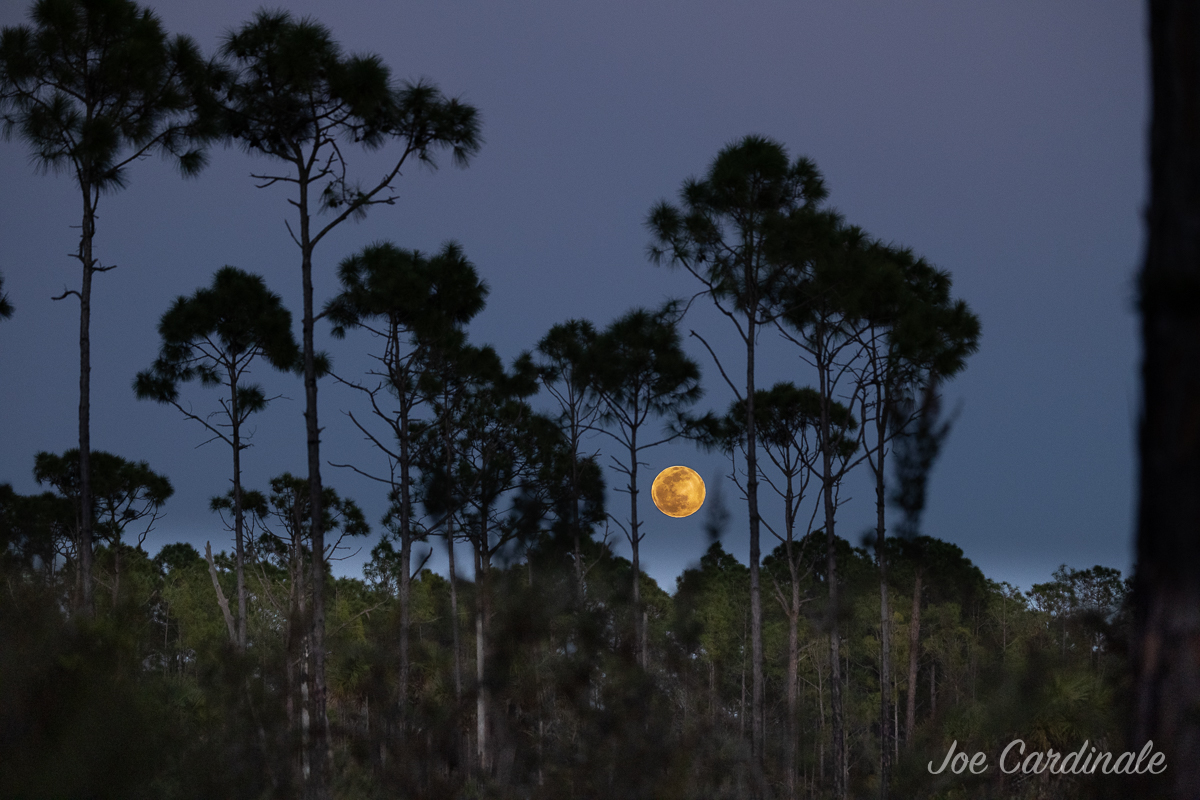
Guided Hikes at Bird Rookery Swamp

Free guided walks are offered each Wednesday from 9 a.m.-12 p.m. each season (November through Easter).

Volunteer naturalists will lead a small group along the shell path to our boardwalk while discussing the history of Bird Rookery Swamp, the purpose of the watershed, the importance of the aquifer and the flora and fauna of this unique ecosystem.


Bird Rookery Swamp

Registration is required, to sign up click here: https://www.eventbrite.com/e/2014-15-bird-rookery-swamp-guided-walks-registration-15291652745

BRS sign

Wild File Q & A: Why do owls turn and bob their heads so much?

Q: Why do owls turn and bob their heads so much?

A young Barred Owl watches activity below.
By Dick Brewer

 
A:     Owl eyes are very large. They are so large that they cannot move in their sockets. Imagine having a pair of binoculars up to your eyes and looking straight ahead. If you hear a sound to the side, you can’t see what made it unless you turn your whole head so the binoculars are pointed toward the sound. That’s how an owl sees all of the time.
Without binoculars, you can roll your eyes up or down and move your eyes left or right without moving your head, but an owl can’t. And even when looking forward, owls have a smaller field of vision than people do.

To see what your visual field looks like try this experiment. Hold your arms out with both of your index fingers in front of your nose. While you stare straight ahead, move your arms in an arc toward your sides, still staring forward. When you can no longer see your fingers
stop moving your arms. The arc that your arms made is your visual field and measures approximately 180 degrees.

An owl’s visual field is only about 110 degrees. For an owl to focus well, it must turn its head to get an object into its visual field. In addition, owls often bob their heads up and down to judge distance.

By Dick Brewer

http://www.dickbrewer.org/CREW.html

Wild File Q&A: Why do turtles spread their legs and feet out when they rest on logs?

Q: Why do turtles spread their legs and feet out when they rest on logs?

turtle on a log
A Red-bellied Turtle basks in Bird Rookery Swamp.


A:      Turtles are cold-blooded animals, so they cannot control their body temperature internally. The only way they have to raise their body temperature is to bask to absorb warmth and vital UV rays. While heat is radiated to their bodies from their shells, they often stretch out their legs to collect additional heat.

Usually, their feet completely widen out at the same time to increase the surface area even more. They are able to engage in thermoregulation and their metabolism functions become elevated. As a result, the efficiency of their immune and digestive systems increases. Another benefit is that they absorb important UVB rays in sunlight. UVB rays become metabolized into vitamin D3 which is necessary to process calcium.

– Dick Brewer

www.dickbrewer.org/CREW.html.


Bike the Bird Rookery Swamp Loop

Like to bike? Well come out to Bird Rookery Swamp on January 9th, 2015 and  join CREW Trust volunteers Peter Tomlinson and Jan Watson for a guided  tour of the picturesque 12-mile loop. 

View beautiful scenery, great wildlife, and enjoy the company of like-minded souls.

Activity Level: Strenuous-This is a trail ride on uneven, soft, grassy/sandy trails. Ground level with swamp on both sides of the trail.

BRING YOUR OWN BICYCLE: Mountain, hybrid or fat tire bikes are recommended. Not appropriate for road bicycles. CREW does NOT provide bikes for this tour. 

Space is limited to first 20 riders that register, so use the link below and sign up fast:

http://www.eventbrite.com/e/bird-rookery-swamp-bike-tour-registration-11948031885


Identify the Plant and Give the Gift of Education

Can you identify the plant in this photo?

dog fennel

This plant, with its feathery foliage and towering stature, grows alongside the trail out at the CREW Marsh Trails. The trails get a lot of visitors this time of year, especially 3rd graders from Collier County as part of their field trips to CREW. Schoolchildren visit CREW with their teachers and spend half of their morning on a nature hike, guided by our very own Jessi Drummond, who leads them through stops that feature explanations about prescribed burns, how to identify poison ivy and why it’s an important food source for deer, and even, if they are lucky, investigating scat (most often Bobcat scat). The other half of their field trip is spent dip netting and identifying the different living organisms in their water samples. The kids then have lunch, and leave- hopefully- with a pretty clear idea of why the watershed is important, with discussions that focus on habitat, the water cycle, and how the marshlands help clean our water.

This plant that is pictured above is one of our sensory teaching tools. Jessi stops with the students, takes off a few leaves, and passes them around to the students. “What do you smell?” she asks as little hands eagerly shoot up in the air. The students share that they smell everything from licorice to mint, and Jessi then lets them know that she smells pickles when she smells this plant which is Dog Fennel. Tying in their senses- hearing, touch, smell, sight- is an important part of the field trip for so many kids who just don’t spend enough time outside.

Education is a very important part of our mission at CREW, and this year, we’ve got a fundraising campaign for the month of December. Our goal is to raise $25,000, and an end-of-year gift from you, our supporters and members, can make that happen. It’s part of #GivingTuesday, an effort by many non-profits nationwide to remind everyone that after Black Friday and Cyper Monday, sometimes it’s nice to find a way to give back and pay it forward. Your donation will help further our education efforts at CREW and support all of our educational programs, including our field trips.

You can find out more about our #GivingTuesday campaign on our website (https://crewtrus.mystagingwebsite.com/2014/11/10/6996/). All donors receive a link to a special set of photographs of our CREW wildlife and donors at higher levels can receive special goodies, like tickets to our Concert and Silent Eco-Auction in March.

Next time you are out on the CREW Marsh Trails, watch out for the Dog Fennel, and take a moment to appreciate how this plant on the side of the trail has such a huge impact on 3rd graders in Collier County.

– Anne Reed

group of students on the CREW trails

Teachers & Parents: October is National “Go on a Field Trip” Month

October is National “Go on a Field Trip Month”, and there’s no better way for kids to learn science than outdoors in nature. Just look at all the new research that shows the benefits of getting kids outdoors to learn.

CREW Marsh Trail - Field Trip invite

So, grab your students, kids, friends, loved ones, and come to CREW to take a walk, explore the wetlands, find frogs and bugs, watch the fall migrating birds fly through and just enjoy the calming, healing world that is CREW!

CREW Strolling Science Seminars: Lessons Learned

We’re wrapping up the third year of the CREW Strolling Science Seminars – our scholarly walks for adults – and we want to publicly thank our seminar leaders who planned and led these fun, hands-on walks at CREW. Much thanks to Kathleen Smith, FWC’s CREW biologist for her session on Florida Black Bears; to FGCU student, Ben Dion, and Dr. William Sanders for their session on The Lives of Fungi at CREW; to Dr. billY Gunnels for his all-day scientific method session called Science in A Day; to Mike Duever for showing us how plant communities respond to Hydrology; to Jack Berninger for a fun seminar about Ferns; and to Ian Bartoszek for his lively session on the American Alligator.

We also want to thank the 113 folks who registered and attended these seminars. Their participation makes it all work!

  • 98% of participants rated the Strolling Science Seminars as Excellent or Very Good
  • 93% would recommend these seminars to a friend
  • 98% rated our seminar leaders as Excellent or Very good
  • 65% said they would share what they learned with others

So, what did they like and learn? As we scanned the participant surveys, we were delighted to discover these insights:

“This was my first attendance at a CREW event (and very definitely not the last). I appreciated the warm welcome and the introduction to other attendees. Three hours packed with information, enthusiasm and laughter. Thoroughly enjoyed it.”

  1. From the Bear seminar: “Kathleen Smith, FWC biologist was well prepared, knowledgeable and pleasant. She answered all questions even if they were off topic. Very informative. I learned a lot about black bears that I didn’t know before.”
  2. From the Fern seminar: “I had never heard of the Azolla event. Learned this is a very important and helpful fern. We saw 15+ different ferns. We learned how ferns reproduce. He also gave us hints on how to tell them apart. We saw that the spores are in different places depending on the type of fern.”
  3. From the Hydrology seminar: “I learned that in Florida two feet of change in elevation can take you through five different ecosystems. (Excellent visual evidence) Maintaining constant water levels is not a good idea even if possible because diversity of plant life needs periods of drought and flooding to create various species that acclimate to changing conditions.”
  4. From the Fungi seminar: “Don’t eat the blue latex ‘shrooms, and orchids need mycelium to grow.” And… “Lichens incorporate cyanobacteria to fix nitrogen.” and “Most of the fungi is underground. What is seen is only the reproductive part. This underground part is being used to further several ecological goals such as filtering pollutants and replacing Styrofoam packing materials.”
  5. From Science in a Day: “As a longtime hiker I finally took the time to stop and understand the spiders in the canopy..prior to this they were just something I brushed away. Then I learned about Cabbage Palm “Boots’ , Wax Myrtle, etc. I also learned I can write a rap song in 5 minutes.” And…”I would have loved to have billY [Gunnels] for a professor, and I wished I had been exposed to these kinds of experiences and these sorts of people when I was a student, as I feel my life would have been much different.” And…”The scientific process is complicated Learning is easier when you are having fun.”

“Nature attracts a diverse, curious population.”

Thanks to CHNEP for partial funding of this environmental education program and to all our participants for making this year’s Strolling Science Seminars such a great success!

Enhanced by Zemanta

Announcing 2013-14 CREW Strolling Science Seminars

Alligator at Bird RookeryThe CREW Trust is pleased to announce an exciting schedule of 2013-2014 CREW Strolling Science Seminars. These seminars are scholarly walks for adults through the CREW trails, led by experts who engage participants in in-depth discussions about specific topics related to the CREW watershed. This is the third season for these scholarly walks at CREW. The past two years of seminars have been funded partially by CHNEP Public Outreach grants.

This year’s seminars include:

  • November 15, 2013 – Florida Black Bears: The Bear Essentials w/ Kathleen Smith, FFWCC Biologist (9 AM – noon)
  • December 14, 2013 – The Lives of Fungi at CREW w/ Dr. William Sanders, FGCU (9 AM – noon)
  • January 11, 2014 – Strolling Science in a Day w/ Dr. Billy Gunnels, FGCU (9 AM – 3 PM)
  • January 31, 2014 – Hydrology; How It Directly and Indirectly Controls the Distribution and Characteristics of Southwest Florida Plant Communities w/ Mike Duever, Natural Ecosystems, LLC (9 AM – noon)
  • February 22, 2014 – Paleo-Plants that the Dinosaurs Ate: Ferns of SWFL w/ Jack Berninger (9 AM – noon)
  • March 29, 2014 – American Alligators: Ecological Engineers of the Everglades Ecosystem w/ Ian Bartoszek of the Conservancy of SWFL (9 AM – noon)

For details about each seminar and to register, go to the CREWTrust page on Eventbrite and scroll to the title of the seminar you want to know more about.