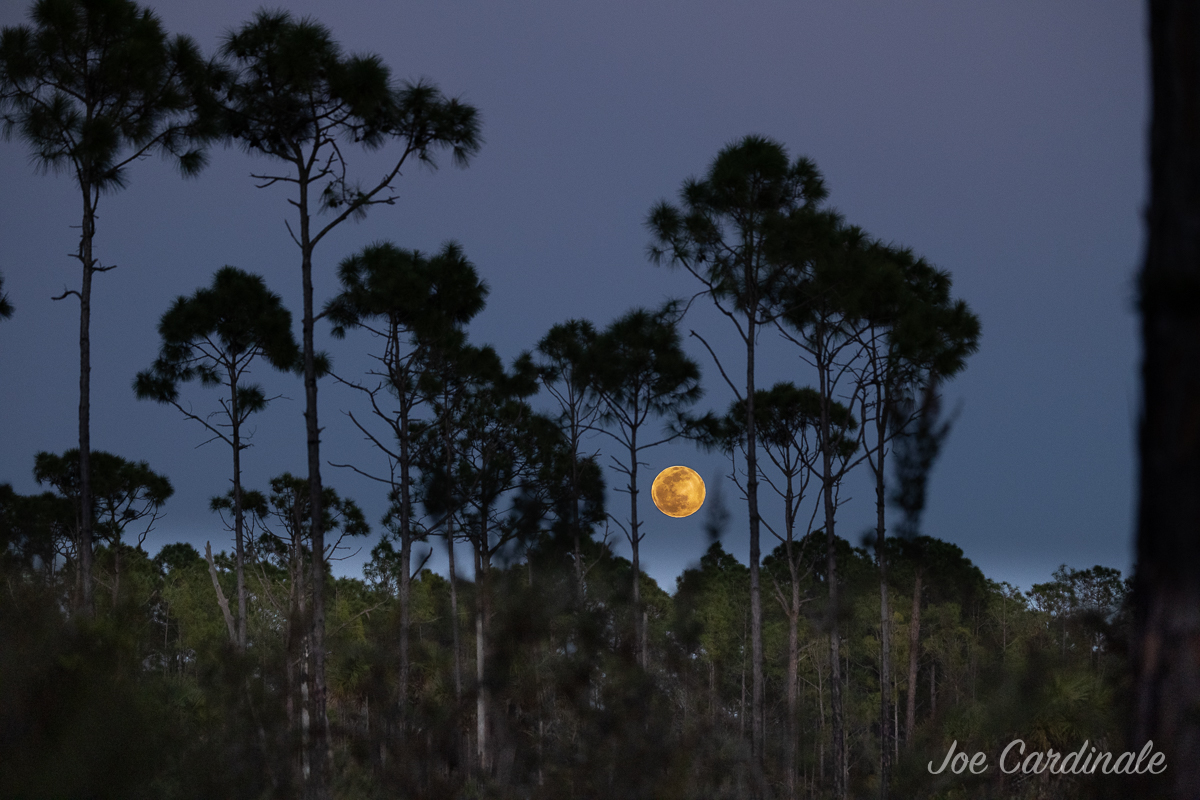
Special thanks to volunteer naturalist Dick Brewer, who regularly visits the CREW trails and compiles wildlife counts. This valuable citizen science is shared with the CREW Trust staff and our FWC biologists and helps give us a glimpse of all the wildlife using the trails.
Needham’s Skimmer, identified and photographed by Dick Brewer
Bird Rookery Swamp
Thursday, March 28 ~~ 7:25 AM – 2:10 PM
temperature: 59.3-77.8º ~~ RH 83.9-44.9%
sky: clear ~~ wind 7-12 mph
BIRDS
Common Gallinule – 1
Double-crested Cormorant – 1
Anhinga – 10
Great Blue Heron – 2
Great Egret – 12
Snowy Egret – 1
Little Blue Heron – 5
Tri-colored Heron – 1
Black-crowned Night Heron – 2
White Ibis – 72
Black Vulture – 3
Turkey Vulture – 4
Swallow-tailed Kite – 7
Red-shouldered Hawk – 23
Belted Kingfisher – 4
Red-bellied Woodpecker – 23
Downy Woodpecker – 3
Pileated Woodpecker – 5
Great-crested Flycatcher – 3
Eastern Phoebe – 1
White-eyed Vireo – 19
Blue Jay – 1
American Crow – 2
Tufted Titmouse – 9
Carolina Wren – 17
House Wren – 1
Blue-gray Gnatcatcher – 2
Gray Catbird – 13
Common Grackle – 9
Palm Warbler – 2
Northern Cardinal – 13
BUTTERFLIES
Palamedes Swallowtail – 3
Tiger Swallowtail – 1
Ruddy Daggerwing – 1
White Peacock – 61
Gulf Fritillary – 1
Phaon Crescent – 1
Tropical Checker – 3
DRAGONFLIES
Eastern Pondhawk – 72
Blue Dasher – 82
Blue Dasher, identified and photographed by Dick Brewer
We actually look forward to the arrival of the Swallow-tailed Kites with something akin to the anticipation of a birthday or holiday.
And when the first birds arrive, the flurry of emails start as people brag about who saw the very first STK of the season.
A swallow-tailed kite soars with a frog in its talons.
We’re crazy about kites at the CREW Project and we know some of you are, too. Here are 10 reasons we love Swallow-Tailed Kites.
1 – Aerodynamics
We could watch kites soar all day long. As one of our volunteers pointed out, the entire design of the bird is aerodynamic and sleek, as if their body is made to slide right through the air. They swoop effortlessly and gracefully to grab prey and it’s while soaring that we are able to easily identify them by their long, forked tail.
2 – Migration patterns
Swallow-tailed kites migrate to Southwest Florida each year from South America to breed. We are their first stop on their winter migration and they normally arrive here in the third or fourth week of February, then gradually later through the rest of Florida, according to the Birds of North America website. Once the adults arrive, they begin gathering nesting material and prepare nests often in the same spot or vicinity as they nested the previous year. Swallow-tailed kites will stay in our area until June or July, and then the adults leave several weeks prior to the juveniles’ departure.
3- Nesting
Swallow-tailed kites are raptors, but they do not have particular strong feet or talons. That’s why they use Spanish moss as nesting material! They have been seen carrying very small, lightweight sticks, but their primary nesting material is Spanish moss. They also nest very high in the “V” of pine trees which make the nests challenging to spot. And, once they chicks hatch, the adults continue to add nesting materials. So, a nest that starts out convex to hold an egg, will eventually become concave as the chick grows!
(Thank you, Kathleen Smith, CREW biologist, for that fun fact)
Swallow-tailed kite carrying Spanish moss for nesting.
4 – Challenge
Everything about the Swallow-tailed kite is challenging! Have you ever tried to get a GOOD PHOTO? Especially of one flying? It’s extremely difficult and we’ve watched plenty of wildlife photographers on the trail gasp in frustration as the birds soar past. And it’s not just capturing the birds on film that is tough – finding the nests is also hard! Because the nests are so high in the trees, and only made sparsely with Spanish moss, they are difficult to find. But, once you have found the nest, you can go back each year and check for activity. For our biologists and volunteer citizen scientists, that challenge is part of the fun of monitoring the kites.
5- Coloration
From the beautiful snow-white head and underbody to the sleek inky wings and back, the kite is a study in contrasting colors. It makes them easily recognizable in the raptor family – for their color and for their forked tail.
6 – The Tail
That gorgeous, v-shaped tail is how all of us easily identify the Swallow-tailed Kite. And, as we inch towards summer, we can tell the juvenilles in flight from the adults because the adults will have longer forked tails than the juvenilles.
7- Feeding time fun
Part of loving raptors is loving the fat that they do raptor stuff – meaning we aren’t upset when we see a bird of prey carrying home dinner. The kites are no exception. They will eat large insects, but remember, they do not have strong feet so they don’t pick up heavy prey. Instead, they mainly eat herps – frogs, anoles and snakes. As a hiker and birder, it can be quite fun to try and puzzle out what they are carrying home to feed their chicks.
8 – Nice Neighbors
One thing that makes them different from other raptors is that the kites will nest near other kites, forming loose neighborhoods (thanks for that name, Kathleen!). That makes it a bit easier for our citizen scientists and the CREW biologists when locating nests. It also makes for easy playdate scheduling (just kidding, birds don’t have playdates).
A kite and chick within the CREW Project.
9 – The CREW Trust Logo
The Swallow-tailed Kite is the bird featured on our logo! We are very proud of the kites, and the fact that the 60,000-acre Corkscrew Regional Ecosystem Watershed is land preserved for water and wildlife and provides habitat for these migratory raptors.
10 – Bringing Friends
The nest monitoring done each year by CREW FWC biologists and volunteers has shown that the numbers of swallow-tailed kites nesting within the 60,000-acres is growing! That’s exciting for us and great news for the birds. You have a really good chance of seeing Swallow-tailed Kites at all four of the CREW Project Trails. They roost around the lake at Bird Rookery Swamp (hike out to the lake, under two miles); they swoop over the red trail at Flint Pen Strand; they have a LOT of nests around the Cypress Dome Trails; and we spot them in the pine flatwoods areas of the CREW Marsh Trails. We hope you’ll celebrate the return of the kites – and their growing population within CREW – by coming out with your friends and exploring the trails in hopes of spotting a kite or two.
special thanks to CREW FWC staff and CREW Trust Volunteers for sharing the photos used in this blogpost.
One of our favorite spring wildflowers is blooming! We spotted – and smelled – the first pawpaws blooming last week along the edges of the flatwoods in the Cypress Dome Trails and the CREW Marsh Trails.
Pawpaws are important for several reasons beyond their beauty and smell. First, they are a host plant for zebra swallowtail butterflies. Second, the fruit they produce is a delicious foodsource for many animals including gopher tortoises.
Want to learn more about CREW wildflowers?
Additional resources to help you find and ID southwest Florida native wildflowers include:
Too cold to head to the trails? Thinking the animals will be huddling somewhere for warmth?
That is true for many of our reptile friends, but the weekend’s heavy rain combined with the cool temperatures made for a lot of wading birds out and about Monday morning at Bird Rookery Swamp!
CREW Trust volunteer naturalist Dick Brewer braved the elements and sent in his wildlife count from yesterday’s chilly excursion.
On Friday, visitor and photographer Bill Grabinski noticed an egret that was entangled in fishing line.
Fortunately, Kathleen Smith, FWC biologist for the CREW Project, was on site at Bird Rookery Swamp and was able to assist. She noted that someone had cut their fising line and the hook was on the bird’s leg, and the line was entangled on the shore. When the bird would attempt to fly away, it would be yanked back. She was able to untangle the bird from the line and release it.
Mr. Grabinski captured the rescue in the photos below.
Long-time CREW Trust volunteer naturalist Dick Brewer is a treasure-trove of information and brilliant citizen scientist. This week’s critter count includes a chicken turtle, almost 30 red-bellied woodpeckers and a great photo of two crested caracaras. Interested in making your own critter count during your next hike? Print out Dick’s BIRD ROOKERY SWAMP Wildlife Checklist and take it with you!
Bird Rookery Swamp
Wednesday, December 19 ~~ 7:05 AM – 1:00 PM
temperature: 54.0-76.0º ~~ RH 85.5-60.5%
sky: sun early, clouds late ~~ wind: calm at start, then 8-12 mph
“That is a really cute stocking-stuffer kind of book,” said volunteer Barbara Centola. “It is the kind of book you would put on your nightstand and read a couple of pages at night.” She purchased one and is planning on giving it to a friend who has shown interest in birding.
For the sentimental hiker
“I love a good walking stick,” said Brenda Brooks, executive director. “And I love to collect hiking medallions to remind me of where I’ve been. It’s an inexpensive way to remember your hike.”
CREW Hiking Medallions (available for Bird Rookery Swamp, CREW Marsh Trails and Cypress Dome Trails ($5 each; limited quantities for local pick-up only; email anne@crewtrust.org)
Tired of glasses that fall off your face when you’re out on a run – or even when you’re clearing Caesar weed? These no-slip, no-bounce glasses are the real deal and trail tested by Anne (hence the Caesar weed reference). And with frame names like “Frank’s Llama Land Ditty” and “Orange you glad I didn’t say banana?” they give the gift of a good chuckle, too.
For the four-legged hiker
“I love the water bottles with the drinking tray attached,” said Anne Reed, mom of two dogs, Brady (10.5 year old lab) and Sheila (2 year old chihuahua). “My dogs think it’s fun and it is easier than me carrying an extra water bottle and collapsible bowl in my pack.”
Stuff those stockings with tickets to the 2019 CREW Concert Under the Stars! You’ll be giving the gift of a fabulous night out with live music, great food, craft beer from Momentum Brewhouse and our very unique silent eco-auction! AND, most importantly, supporting our Dr. David R. Cooper Education fund.
We joke that there are two types of hikers – point to point hikers, who go go go; and those that move inches in an hour. Sometimes those exist all in the same family! This book is great for the slow-moving hiker who stops to take pictures of panther scat (ANNE) and for the speedy hiker who needs to stop and smell the paw-paw.
Take them on a hike! Gift wrap this coupon for a free hike and then take your friend out on one of the CREW Trust trails. Whether you spend the hike identifying wildflowers, searching the sky for Caracaras, or just catching up, time spent together is the best gift of all. The trails are open every day, sunrise to sunset. Feel free to print one of these fun gift cards and use it to schedule time out in nature with your friends and family! Oh, and if you want to give the gift of a guided walk, register yourself and a friend for one of our upcoming free guided walks.
*There are private properties near the CREW Flint Pen Strand Hiking Trails. The public should remain on marked trails and not enter areas marked as private property.
From Fort Myers: From I-75 S, take exit 116 and turn east on Bonita Beach Road. Travel approximately 3.8 miles and turn left onto Vincent Road. The trail head and main parking lot are on the left. Continue further down Vincent Road and make your first right for the Pine parking lot. A third parking option may be reached by making an immediate right after turning left off of Bonita Beach Road.
From Naples: From I-75 N, take exit 116 and turn east on Bonita Beach Road. Travel approximately 3.8 miles and turn left onto Vincent Road. The trail head and main parking lot are on the left. Continue further down Vincent Road and make your first right for the Pine parking lot. A third parking option may be reached by making an immediate right after turning left off of Bonita Beach Road.
We also like wearing normal pants to work and leaving our elastic waist pants at home, which means a little friendly exercise may be in order this weekend. And if you’ve got serious pie plans like us, we’ve got four reasons you should hit the trails this holiday weekend.
Reason #1: Burn, baby, burn
According to Livestrong.com, one hour of hiking burns between 430 and 460 calories if a person weighs 160 pounds. The amount of calories burned doesn’t just vary based on weight; it also varies based on terrain. Because most of Southwest Florida is flat, we probably burn less calories, but the article says nothing about how the high humidity makes us sweat buckets. And, since Americans consume between 3,000 and 4,000 calories during Thanksgiving Dinner, a few hours on the trail Thursday before turkey time might be a good idea.
Reason #2: Nature therapy
Trail running, forest bathing, communing with nature, hugging the trees – however it is that you enjoy the outdoors, you are getting actual benefits. Spending time outdoors can have significant positive impacts on your health – including reducing stress. Hit the trails and hike away the family drama or Black Friday shopping trauma – whatever you need to escape from, let the fresh air and warm Florida sun wash it all away.
photo credit: Bill Zaino
Reason #3: Make memories
We see it all too often during our education programs – today’s kids just don’t have the freedom and opportunity to run wild outside. Make some memories this weekend with your kids and grandkids and take a hike. Not sure what you’re doing? Grab a map at the kiosk and head out to the observation tower at the CREW Marsh trails – there and back is a very manageable (approximately) one mile hike. Your curious guests may ask a ton of questions but remember that, to enjoy nature, you don’t have to KNOW nature. Not sure what that purple wildlfower is? Download an app ahead of time to identify it OR just call it a PPW (pretty purple wildflower). Or completely make up a name because your six year old niece has no idea whether or not that flower is called a Pecanpie regretticus.
Reason #4: Florida fall
Yes, we actually do have fall here in Florida. It’s the tail end of our fall wildflower season and the red maples are turning glorious color and dropping their foliage. If you truly miss the smell of falling leaves, head out to the CREW Marsh Trails and scuff your feet through the thin layer of maple leaves that is collecting on the boardwalk. The cypress trees in Bird Rookery Swamp are changing colors as well and will soon briefly lose their needles. And don’t forget about the animals – the red-shouldered hawks are really active right now as they prepare for mating season. Unlike most animals on the trails, the noisy shrieks of the hawks completely overpowers any loud little children you’ve brought with you.
If you do hit the trails this weekend, please remember to do so safely – take water, wear closed-toe shoes (to protect against fire ants), grab a map from the kiosk and turn back towards the parking lot before you feel tired. And remember to practice the leave no trace principles – leave nothing but footprints.
It’s the almost November, which means cooler temperatures, blooming wildflowers and time to register for our weekly guided walks!
Volunteer naturalist and spider enthusiast Janet Bunch returns for her second season leading our Marsh Trail interpretive hikes. Her walk takes guests through pine flatwoods and oak hammocks to the observation tower overlooking the 5,000-acre sawgrass marsh before traversing the short boardwalk and heading back to the trailhead.
Guests will learn about the plants and animals that call the Corkscrew Regional Ecosystem Watershed their home and engage in lively, scholarly conversations with Janet and other CREW Trust Volunteers.
The walks are free but registration is required. Please visit our eventbrite page to register. Guided walks are held each Tuesday from 9 a.m.-12 p.m. November-March, excluding Christmas Day and New Year’s Day.